


Revolutionizing Indian Highways: The Cost-Effective and Eco-Friendly Impact of Biaxial Geogrids in Flexible Pavements.
Mr.
Deeraj Reddy & Mr. Manish Barot, TechFab India Industries Ltd.
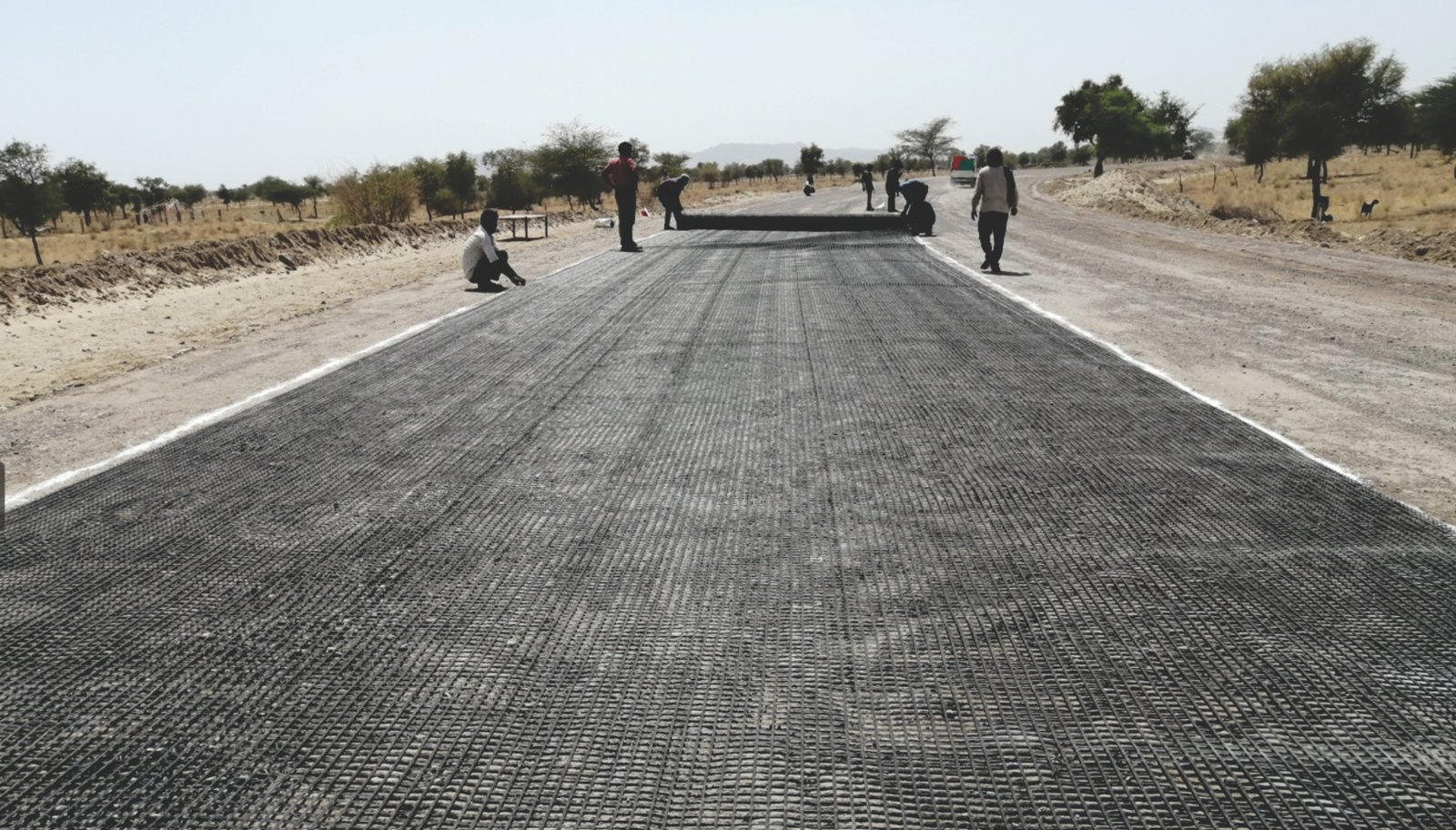
Use of Biaxial Geogrid in Flexible Pavement in the state of Rajasthan
Introduction:
In the Indian highways
industry, the use of biaxial geogrids in flexible pavements has gained
significant attention due to its cost-saving benefits, reduced construction
time, and positive environmental impact. Biaxial geogrids, made from polyester
or polypropylene polymers, enhance the resilient modulus of granular layers,
leading to a significant reduction in required bituminous materials and natural
resources. The Indian government has also taken proactive measures through
MoRTH circulars, IRC design guidelines, and BIS codes to promote the use of
certified geogrids in infrastructure projects. Among the manufacturers, TechFab
India stands as the largest producer of biaxial geogrid products in the
country, holding a dominant market share.
Cost
Benefits and Environmental Impact:
One of the primary
advantages of incorporating biaxial geogrids in flexible pavements is the
potential for cost savings. By improving the resilient modulus of granular
layers, the thickness of dense bituminous macadam (DBM) and wet mix macadam
(WMM) layers can be significantly reduced. As a result, the overall cost of the
pavement construction is reduced by approximately 5% to 25%, depending on the
project's materials cost. Project cost can be optimized without compromising
the pavement's structural integrity.
Additionally, the reduced
quantities of WMM and bituminous layers contribute to minimizing the
consumption of natural resources in each project. By utilizing biaxial
geogrids, the Indian highways industry takes a significant step toward
sustainable development and reduces its carbon footprint on the environment.
Construction
Time Savings:
Another significant
advantage of employing biaxial geogrids is the notable reduction in
construction time. As the thicknesses of DBM and WMM layers decrease, a
two-layered DBM can be effectively replaced by a single-layered application.
This streamlined process expedites construction timelines and enhances
efficiency, leading to substantial time savings in flexible pavement projects.
Government
Initiatives:
The Government of India
has taken proactive measures to promote the usage of geogrids in flexible
pavements. MoRTH Section 702 provides specifications for the geogrids to be
used, ensuring the quality and standardization of products. IRC 37:2018 and IRC
SP 59:2019 offer comprehensive design and installation guidelines for
incorporating geogrids into flexible pavements. These guidelines facilitate the
structural design process and ensure proper installation practices.
The recently released Gazette
in April 2023 mandates the use of Bureau of Indian Standards (BIS) certified
geogrids in Indian projects. This initiative ensures the best quality of
geogrids and promotes the utilization of locally manufactured products,
supporting domestic industries.
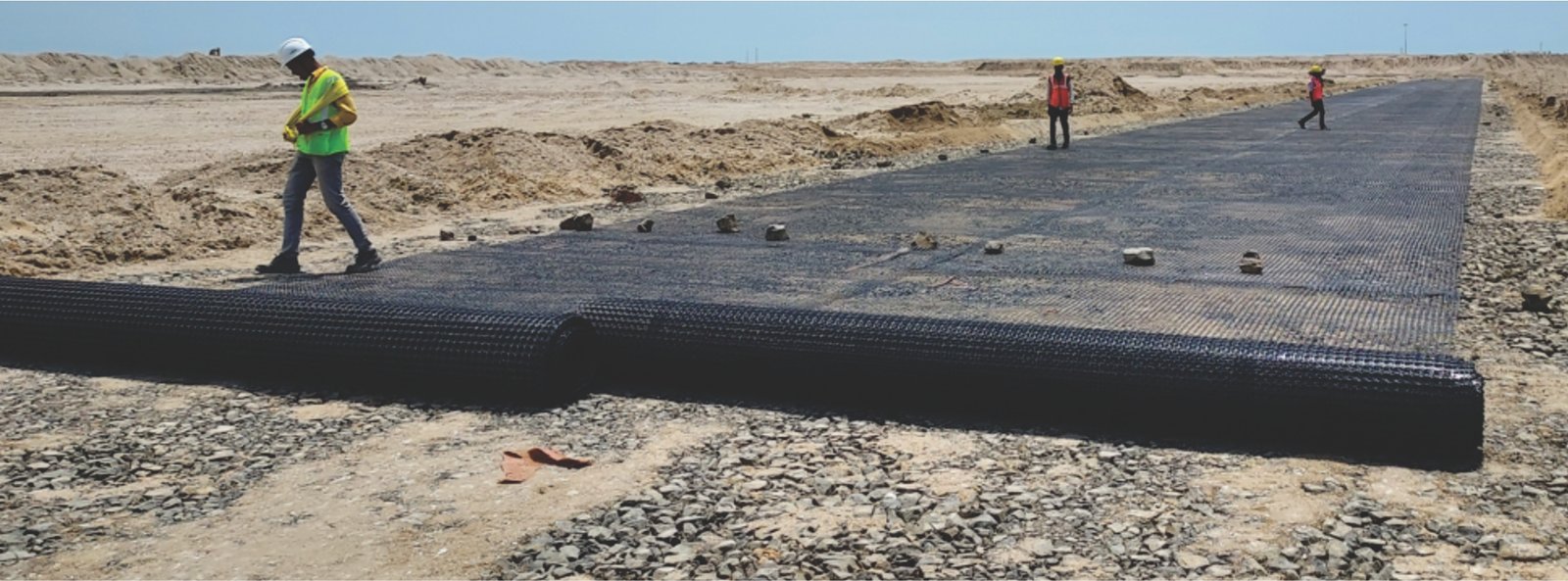
Use of Biaxial Geogrid in flexible pavement in the state of Gujarat.
Design
Guidelines:
IRC 37:2018 and IRC SP
59:2019 provide detailed methodologies for the design of geogrid-reinforced
pavements. These guidelines recommend two methodologies: the Layer Coefficient
Ratio (LCR) and the Modulus Improvement Factor (MIF) methods. Furthermore, the
guidelines mandate the use of third-party certified LCR/MIF factors in the
design process, ensuring accurate and reliable calculations.
TechFab
India's Role in the Indian Market:
TechFab India plays a
pivotal role in the Indian market as the largest manufacturer of biaxial
geogrid products. Their significant market share highlights their expertise and
commitment to producing high-quality geogrids for sustainable highways. With
their products widely available and earnest technical services, contractors and
developers can easily access reliable and sustainable solutions for
incorporating geogrids in their flexible pavement projects.
Conclusion:
The utilization of
biaxial geogrids in flexible pavements has emerged as a cost-effective and
environmentally friendly solution for the Indian highways industry. By
improving the resilient modulus of granular layers, contractors can achieve
significant cost savings, reduced construction time, and minimized use of
natural resources and bituminous materials. The Government of India has been
proactive in promoting the use of certified geogrids through MoRTH circulars,
IRC design guidelines, BIS codes, and a recent Gazette mandating the use of BIS
certified products. With TechFab India leading the market as the largest
manufacturer of biaxial geogrids, the industry is well-positioned to embrace
this innovative technology for sustainable and efficient infrastructure
development.
For further details
kindly contact :
TechFab India Industries Ltd.
712, Embassy Centre,
Nariman Point, Mumbai - 400021
Tel: + 91- 22 - 2287 6224
/ 6225
Email :
info@techfabindia.com
Website : www.techfabindia.com
Related Articles

Current Issue

10-2026
