


Pavement Strengthening using Asphalt Interlayer at Suman Nagar, Priyadarshani Circle, Mumbai, Maharashtra - Case Study Mr. Manish Barot & Mr. Deeraj Kumar
Introduction:
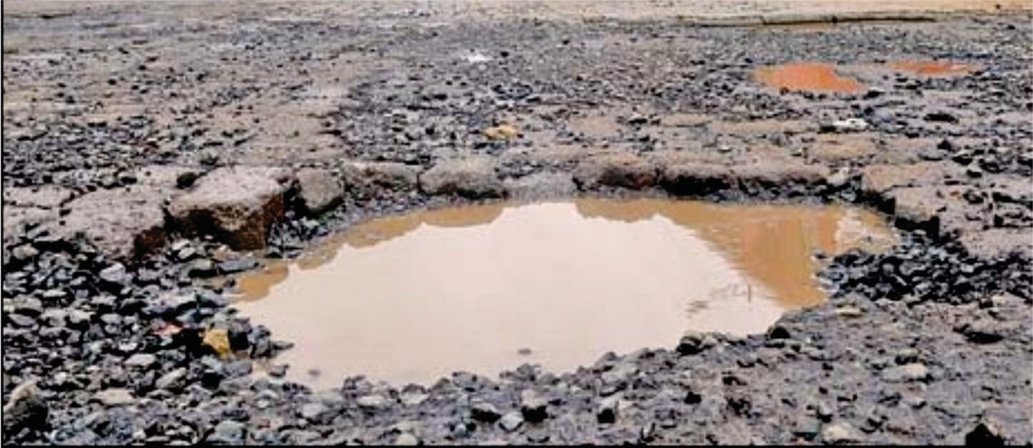
Rapid failures of Suman Nagar, Chembur stretch were identified to be a combination certain facts mentioned as - incorrect sand bedding thickness and deficient compaction of the paving block layer. These constructional defects ultimately caused shear and differential settlements in the sand bedding layer and subsequent water infiltration into the pavement and overstressing of the cement stabilized sub base layers.
The poor draining
characteristics of the bedding sand, as used, would trap water that permeated
into the bedding layer, thereby aggravating the shear failure risk. The
combination of stagnant water on the road surface along with heavy traffic
could quickly cause erosion of the road surface. Secondly, the surface water
was penetrating into the road body, reducing the load bearing capacity of the
pavement, which was causing further damage to the road. Drainage of the road
surface is normally provided by shaping the carriageway with a camber. The
client therefore wanted an innovative method so that the solution adopted next
would be a long term solution.
Solution Proposed:
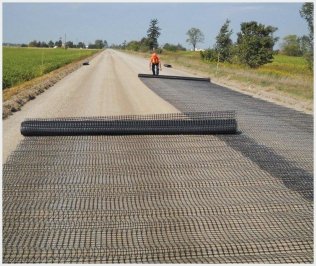
As the solution wanted by the client was a long term one, Techfab India Industries Limited suggested the application of Asphalt Interlayer. Asphalt Interlayers are the Combination of TechGrid PP Biaxial Geogird and TechPave Paving Fabric forming a stiff interlayer and facilitating strong bond with the old and new asphalt thereby depropagating the cracks horizontally by absorbing the tensile stresses.
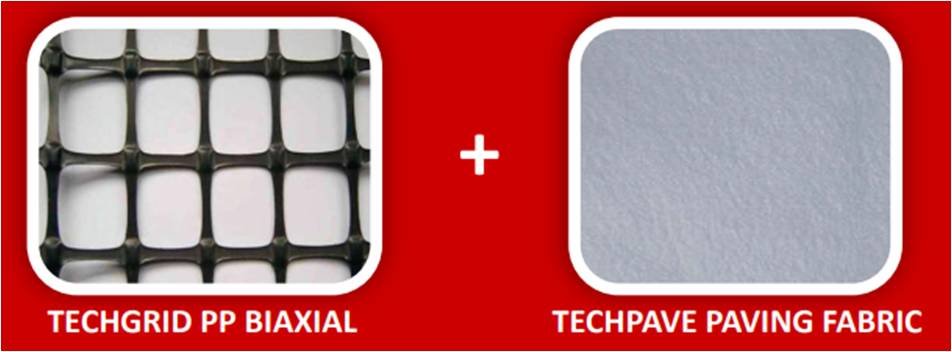
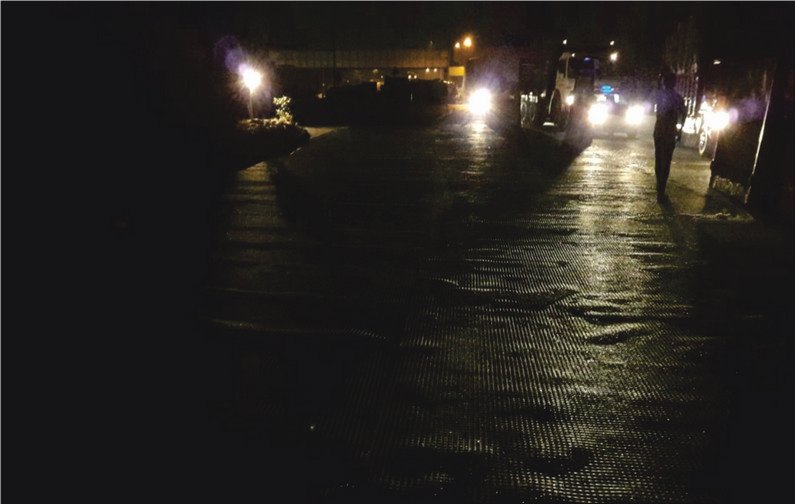
Fig 2: During construction photographs
Asphalt Interlayer provides various advantages such as this would restrict reflective cracking, prevent water and tear, gives long term strength to the pavement. Being a heavy traffic stretch, some parts of pavement had severe undulations and drain water was flowing towards the road and not out, due to the wrongly placed camber. The existing surface was cleaned and made dust, debris free, and free from obstacles. Then tack coat was sprayed over which Asphalt Composite was laid.
Most of the work was conducted at night, as the traffic was not interrupted. Over the Asphalt Composite, Asphalt layer was laid and then compacted properly.
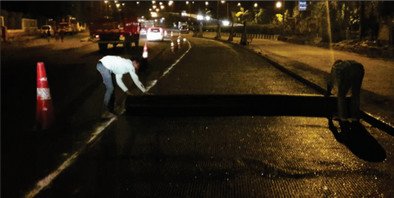
Fig 3: During construction photographs
How Asphalt Interlayer Reinforces Pavements ?
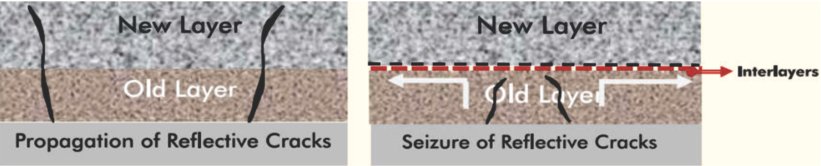
The most conventional procedure for repair and rehabilitation of rigid or flexible pavement is to provide an overlay as per the standard IRC/ MoRTH specifications. While this new overlay is laid over the existing one, the reflective crack existing in the old layer slowly propagates in the new laid over. This propagation is the beginning of the failure of asphalt pavement, following which numerous asphalt distresses occurs depending upon the traffic volume in the region and passage of time.
To stop such failures, an interlayer
is required between the existing old distressed pavement and new overlay so
that the propagation of crack is intercepted in between. This interlayer must
have properties with stiff tensile strength & minimum elongation and
capacity to sustain laid temperatures of asphalt without melting.
Conclusion:
The construction of road is completed successfully and the department officials are satisfied with the performance of Asphalt Interlayer.
Related Articles
Current Issue

10-2026
