


Dam Rehabilitation and Improvement Project (DRIP) for Enhancing Dams Safety and Operational Performance

Water is becoming scarce resource day by day making it essential to upkeep water resources/ infrastructure in best possible condition. Dams, being a major infrastructure component of water resources, play a vital role in providing overall water security to the country. Over the last fifty years, India has invested substantially in dams and related infrastructures, and ranks third after USA and China in the number of large dams. 5264 large dams are in operation in the country currently and another 437 are under construction. In addition to this, there are thousands of medium and small dams. Still, as the population is growing at a steady pace, water security of the country is becoming an issue of concern for all. It has been noted over a period of time that water is in the centre stage of disputes between various State Governments. Besides playing a major role in the development of the country especially in providing food and energy security, concerns have been raised about the safety of these wheels of the development.
About 80% of our large dams are over twenty-five years old. About 209 dams are over 100 years old and were built in an era when design practices and safety considerations were much below the current design and safety norms. Several of these dams may be experiencing distress and are in need of attention for ensuring their structural safety and operational efficiency. There has been minimal investment in extensive O&M of structures since dam construction and commissioning.
Government of India is cognizant of the need for large-scale renovation of the country's dams, and since 2010 has been implementing the World Bank-supported Dam Rehabilitation and Improvement Project (DRIP) to begin to address dam safety concerns. DRIP was approved by the Board on June 29, 2010, and was declared effective on April 18, 2012.
In April 2012, Ministry of Water Resources, River Development & Ganga Rejuvenation through Central Water Commission with an objective to improve safety and operational performance of selected dams, along with institutional strengthening with system wide management approach, embarked upon the six year Dam Rehabilitation and Improvement Project (DRIP) with World Bank assistance at a cost of INR 2100 Crore (US$M 437.5).

The project originally envisaged the rehabilitation and improvement of 223 dam projects in four states namely, Kerala, Madhya Pradesh, Odisha, and Tamil Nadu. Later Karnataka, Uttarakhand (UJVNL) and Damodar Valley Corporation (DVC) joined the DRIP, and number of dams in DRIP portfolio increased to 257; due to the addition/deletion of few dams during implementation by partner agencies, presently 198 dam projects are being rehabilitated.
DRIP consists of three main components: Rehabilitation and Improvement, Institutional Strengthening and Project Management.
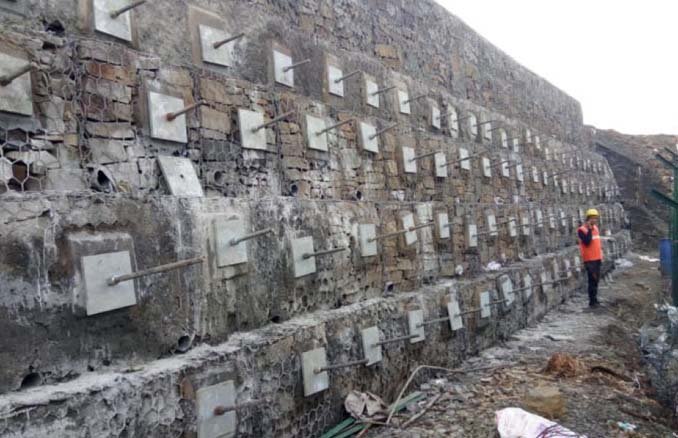
a. Rehabilitation and Improvement of Dams and Associated Appurtenances, DRIP is financing the rehabilitation of 198 project dams, many of which are more than 25 years old and for which the current risk profile with respect to climate change induced impacts is also a matter of significant concern. The ongoing interventions include: treatment of leakage through masonry and concrete dams and reduction of seepage through earth dams; improving dam drainage rehabilitation and improvement of spillways, head regulators, draw-off gates and their operating mechanisms, stilling basins, and downstream spillway channels; improving approach roads; improving office and housing accommodation; and improving dam safety instrumentation. The project also supports hydrological assessments (including inflow assessment to understand the changes in the hydrological inflow regimes as well the futuristic flow in the light of climate change) and specialized consulting services to formulate strategy for long-term management of these changing hydrological regimes. In addition, preparation and implementation of asset management plans, dam-wise Emergency Action Plans (including long term action plans to mitigate climate change induced risks), emergency warning systems, public awareness campaigns and flood inundation mapping are ongoing in all participating states.
b. Dam Safety Institutional Strengthening, focusing on regulatory and technical frameworks for dam safety assurance. The activities include customized training nationally and internationally to the Central Dam Safety Organizations (CDSO) and the State Dam Safety Organizations (SDSO); participate in dam safety courses; study tours, and linking with foreign agencies that have advanced dam safety programs such as the United States and Australia; development of Management Information Systems (MIS) and other programs to capture and analyze data for long-term planning including futuristic climate change scenarios and guiding of dam operations including the DHARMA tool; and training in hazard and vulnerability assessment and dam-break analysis.
c. Project Management: Establishment and operation of project monitoring and management units at central (Central Project Management Unit – CPMU) and state (State Project Management Units – SPMUs) levels.

The Dam Rehabilitation and Improvement Project (DRIP) which was scheduled to be completed in 2018 got two years extension from Cabinet Committee on Economic Affairs (CCEA). CCEA gave approval for two-year time extension for project from July 2018 to June 2020. CCEA has also approved revised cost estimate of the DRIP project. It has been increased to Rs. 3,466 crore from earlier Rs. 1968 crore. Out of total revised cost of Rs.3,466 crore, Rs.2,628 crore will be funded by World Bank and Rs.747 crore will be funded by DRIP States or Implementing Agencies (IAs) and balance Rs.91 crore will be funded by Central Water Commission (CWC).
DRIP Phase II and Phase III
The current phase of DRIP is scheduled to be completed in June 2020 at an estimated cost of Rs. 3,466 crore. Considering the success and achievements of DRIP, the Government of India has initiated the next phases of the project with World Bank support. Under the ongoing Dam Rehabilitation and Improvement Programme (DRIP), the World Bank has approved Rs 11,000 crore for improving the safety and operational performance of 733 large dams across 18 states over the next 10 years. Besides operation, maintenance and emergency action plans, the programme will also focus on revenue generation at dams through tourism, fisheries, water recreations and solar and hydropower. The major dams which are to be covered in phase-II and III of the DRIP include Bhakra and Pong dam in Himachal Pradesh, Srisailam in Telangana, Koyna and Jayakwadi in Maharashtra, Matatila, Ramganga and Raj Ghat in UP, Ukai in Gujarat, Rana Pratap Sagar and Mahi in Rajasthan, Hirakud and Rengali in Odisha and Umiam in Meghalaya


Current Issue

10-2026
