


Road to Shanghai: bauma CHINA 2026 - Electric Powertrains & Hydrogen in Earthmoving (Part 2)
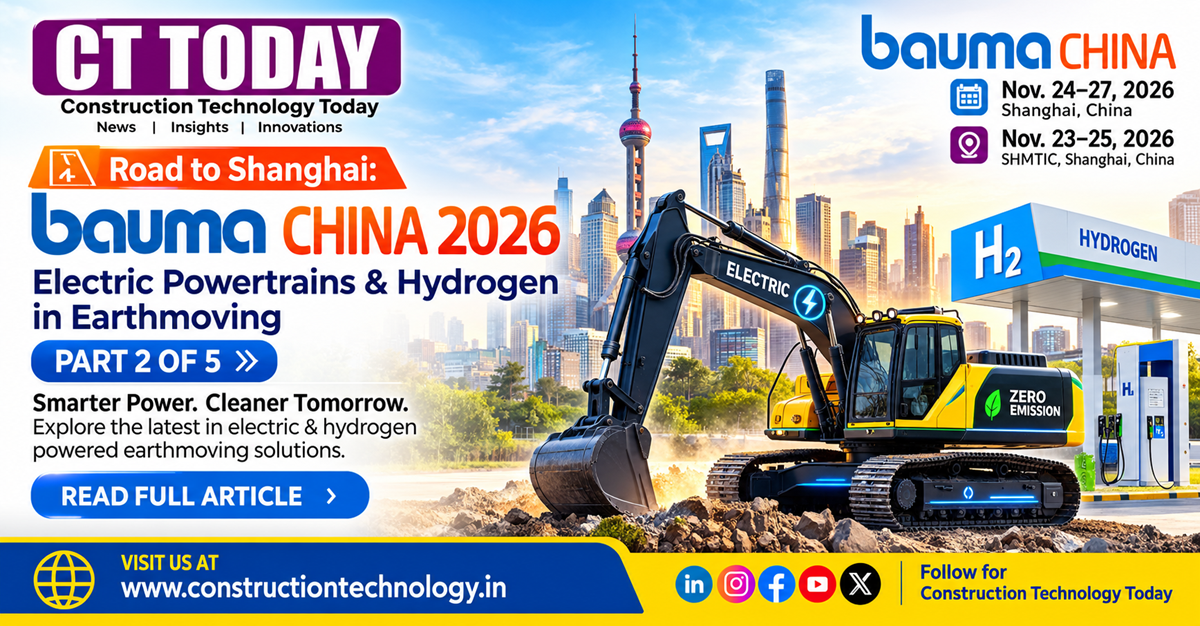
Road to Shanghai: bauma CHINA 2026 | Part 2 of 5: The Electric Heavyweight Shift - Battery-Electric Powertrains and Hydrogen in Earthmoving
AHMEDABAD / SHANGHAI - If you talk to fleet managers visiting manufacturing yards or previewing upcoming line-ups for bauma CHINA 2026, one thing becomes crystal clear: electrification is no longer just an experiment for compact utility loaders. It is moving aggressively up the weight class into heavy wheel loaders, 20-ton plus excavators, and rigid dump trucks.
Of course, engineering a battery pack or fuel cell to survive the punishing, dust-choked, shock-loaded environment of an open-cast quarry or high-altitude earthmoving site is a completely different challenge than electrifying an urban delivery van. Part 2 of our series explores how OEMs are tackling the heavy-duty transition.
1. Battery-Electric vs. Hydrogen: Finding the Right Fit
Manufacturers aren't putting all their eggs in one basket. Different job site profiles demand different zero-emission approaches:
- Battery-Electric Systems (BEV): Currently leading the charge in medium wheel loaders and urban excavators. Relying on high-voltage architectures (600V to 800V) paired with robust lithium iron phosphate (LFP) chemistry, BEVs provide instant torque and zero tailpipe emissions—making them a natural favorite for enclosed spaces, tunnels, and night shifts where noise pollution is heavily penalized.
- Hydrogen Fuel Cells (FCEV): Finding traction in ultra-heavy mining haulers and continuous 24/7 quarry operations. When charging downtime threatens multi-shift productivity, hydrogen refueling offers a familiar, rapid turnaround alternative while retaining heavy-load capability.
2. The Battle for Thermal Resilience on Site
| The Engineering Hurdle | The Diesel Standard | The Alternative Powertrain Fix |
|---|---|---|
| High Ambient Heat (>45°C) | Mechanical belt-driven fan and core clearing | Liquid-cooled battery management & smart variable-speed electric fan arrays |
| Shock Loads & Rock Vibration | Rubber engine mounts and cast iron blocks | Reinforced IP67-rated battery housings & vibration-isolated busbars |
| Energy Recovery | Hydraulic retarders dumping energy as waste heat | Regenerative braking systems capturing up to 15-20% back into storage packs |
3. Real-World Charging and Site Infrastructure
The biggest bottleneck for contractors isn't the machine itself, it's site power availability. Moving an electric fleet to a remote highway or greenfield quarry requires mobile high-capacity DC fast-chargers (often pushing 360 kW+) or swappable battery pack stations that keep iron turning around the clock.
Coming Up in Part 3 (Tomorrow): Autonomous Fleets & 5G Remote-Control Job Sites, Moving from Concept to Reality. Stay tuned to Construction Technology Today!
Explore More on Construction Technology Today:
- Catch up on Part 1 of our bauma CHINA series exploring the shift toward smart heavy machinery.
- Browse our comprehensive archives on bauma CONEXPO India.
Related Articles

Current Issue
11-2026
