


Vedanta Aluminium Accelerates AI-Led Transformation Across Manufacturing Operations
AI, industrial IoT, digital twins and predictive
analytics are enhancing safety, logistics, asset reliability and operational
efficiency across the company’s plants
New
Delhi, September 2, 2026: Vedanta Aluminium is deploying artificial intelligence, the Industrial
Internet of Things, advanced analytics and intelligent safety systems across
its operations to develop more connected, efficient and resilient manufacturing
processes.
As Indian
manufacturers adopt the next generation of industrial technologies, real-time
operational visibility and data-led decision-making are becoming increasingly
important. These capabilities can help companies improve productivity,
strengthen workplace safety, minimise operational risks and enhance equipment
reliability.
Vedanta
Aluminium’s digital transformation programme is delivering practical
improvements across logistics, production, workforce training, asset management
and industrial safety.
AI-Enabled Logistics at BALCO
At
BALCO’s aluminium smelter in Korba, Chhattisgarh, four AI-enabled control
towers have been introduced to provide greater visibility and oversight across
the plant’s logistics ecosystem.
The
platforms integrate GPS, IoT-based vehicle tracking, video telematics,
geofencing and real-time data analytics. Together, these technologies monitor
coal logistics, finished-goods deliveries and ash-management operations.
The
connected system enables operating teams to track vehicle movements, identify
potential disruptions and respond more quickly to changing logistics
conditions. It also supports improved fleet utilisation and greater
transparency across complex material-movement processes.
Intelligent Safety Training at Lanjigarh
At
Vedanta Aluminium’s refinery in Lanjigarh, Odisha, digital technologies are
being used to strengthen safety awareness and workforce preparedness.
The
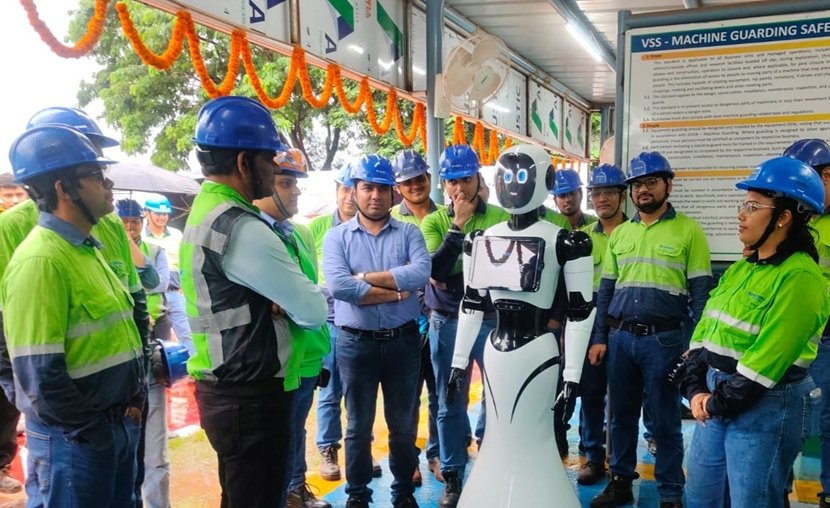
refinery has introduced Aluminati, an AI-powered robot designed to make
safety training more accessible and engaging. The system provides real-time
guidance, multilingual assistance and interactive digital learning to help
employees understand important workplace-safety practices.
The
facility has also deployed a Heavy Motor Vehicle Driver Simulator, which
gives drivers a controlled, risk-free environment in which to improve their
hazard-perception, emergency-response and safe-driving capabilities.
By
recreating realistic operating scenarios, the simulator allows drivers to
practise responding to potentially dangerous situations without exposing
people, equipment or infrastructure to actual risks.
Predictive Operations at Jharsuguda
Vedanta
Aluminium’s smelter in Jharsuguda is integrating AI, machine learning, advanced
sensors, digital twins and asset-health analytics into critical manufacturing
processes.
These
technologies provide real-time visibility into operating conditions and equipment
performance. The transition from periodic inspection to continuous monitoring
allows plant teams to identify anomalies, anticipate potential equipment
failures and undertake maintenance before an operational disruption occurs.
Predictive
insights also support improved process reliability, better resource utilisation
and faster decision-making across the facility.
Commenting
on the company’s digital initiatives, Rajesh Kumar, CEO, Vedanta Aluminium,
said technology was becoming integral to the way modern industries approach
safety, operational excellence and productivity.
“Our
focus is not simply on adopting new technologies, but on applying them to solve
real operational challenges. The initiatives undertaken across our plants are
creating connected and data-driven operations that enable our teams to
anticipate risks, make faster decisions and operate more efficiently,” he said.
“This
technology-led transformation is aligned with India’s goal of building globally
competitive, resilient and future-ready manufacturing capabilities,” Kumar
added.
Building Connected Manufacturing Operations
Collectively,
these initiatives are improving visibility, safety and performance across
Vedanta Aluminium’s integrated value chain. Real-time data allows operational teams
to monitor activities more closely, identify emerging risks and make informed
decisions without depending solely on periodic assessments.
By
applying advanced technologies to specific industrial challenges, Vedanta
Aluminium aims to strengthen operational excellence and demonstrate how large
manufacturing facilities can transition towards more intelligent and predictive
operating models.
The company’s adoption of AI, connected sensors and advanced analytics also reflects a wider shift within Indian manufacturing towards Industry 4.0 practices capable of improving efficiency, resilience and global competitiveness.
Related Articles



Current Issue
11-2026
