

Runaya Achieves 55% Women Workforce, Expands Leadership Pathways
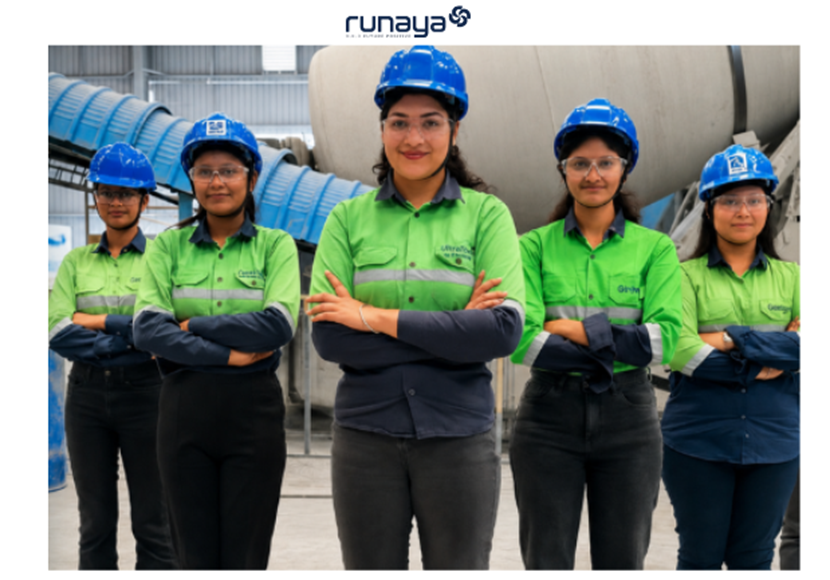
Company strengthens women’s participation in
manufacturing through equal shift access, talent mobility and structured career
development
Runaya, a
Vedanta company specialising in advanced technological solutions for the circular
economy and critical metal recovery, has achieved 55% women
representation across its workforce, marking a significant milestone in its
efforts to strengthen diversity and inclusion in the manufacturing sector.
Women at
Runaya are already contributing across a wide range of functions, including Operations,
Finance, Human Resources, Legal, Commercial, ESG and Corporate Communications,
with several employees taking on leadership and decision-making
responsibilities.
Creating Equal Pathways to Leadership
Runaya’s
approach focuses on creating structured opportunities for women to build
long-term careers across operations, technical and business functions.
The company aims to extend women’s participation into leadership roles by
providing access to cross-functional opportunities, continuous learning and
increased responsibilities.
The
company has set a target of 60% women representation, reflecting its
broader objective of building a more inclusive workforce as the manufacturing
and critical metals sectors continue to evolve.
Runaya’s
diversity initiatives include the Spouse Hiring Initiative, talent mobility
programmes and workplace support systems, designed to help employees build
sustainable careers while addressing practical challenges associated with
working in industrial environments.
Equal Access to Shifts and Workplace Support
A key
element of the company’s approach is Equal Shift Access, including
opportunities to work night shifts. Dedicated safety and transportation
arrangements, welfare support and accommodation at Vedanta townships are also
provided to create a supportive working environment.
These
measures are intended to ensure that women have access to the same range of
professional opportunities and career progression pathways as their colleagues.
From First Jobs to Leadership Roles
For
several women at Runaya, joining the manufacturing sector has provided an
opportunity to achieve professional independence and create new possibilities
for their families.
The
company has seen first-generation professionals progress into leadership
positions through cross-functional movement, continuous learning and greater
responsibility. Some employees have pursued higher education alongside
their careers, while others have progressed from entry-level positions into
senior business roles.
One
example cited by the company is a Graduate Engineer Trainee who progressed
to become Head of Commercial for Runaya’s Recycling business, demonstrating
the potential for structured career development to translate into leadership
opportunities.
Diversity as a Driver of Industrial Innovation
Naivedya
Agarwal, Managing Director, Runaya, said:
“Manufacturing
has recognized the need for inclusion for years, but meaningful change requires
creating equal access to opportunity and leadership. Our 60% representation
target is deliberate and reflects our belief that diversity strengthens not
just the workforce, but the quality of work we deliver. As the manufacturing
and critical metals sector grows phenomenally, diverse perspectives are
enriching how we solve problems, innovate, and respond to a rapidly evolving
industry. By building equal pathways to leadership, we are creating a workforce
that is more agile, capable, and ready to shape India’s next phase of
industrial growth.”
Strengthening the Future of Manufacturing
Runaya’s
workforce strategy reflects a broader focus on increasing women’s participation
in manufacturing and other traditionally male-dominated industrial sectors. By
combining workforce diversity with equal access to shifts, workplace support
and structured career progression, the company is seeking to build a talent
pipeline that can support its future growth.
The company’s progress from 55% women representation towards its 60% target also highlights the growing emphasis on developing inclusive talent models within India’s manufacturing and critical-metals ecosystem.
Related Articles

Current Issue
11-2026
