


Modern Ready Mix Concrete Plants: Produces Better Quality Special Concrete Mixes
Modern Ready Mix Concrete Plants: Produces Better Quality Special Concrete Mixes
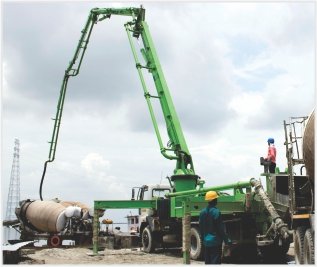
The advent of commercial Ready Mix Concrete (RMC) in India is not so old, but in recent years, it has become the preferred choice of architects, engineers, and consumers. Ready-mix concrete refers to concrete that is specifically batched or manufactured for customers' construction projects and supplied to the customer on-site as a single product. It is a mixture of Portland or other cement, water, and aggregates: sand, gravel, or crushed stone. An additive is also added to improve the workability of the concrete and/or increase the setting time of concrete to factor in the time required for the transit mixer to reach the site/ place of casting.
This type of concrete guarantees higher durability and sustainability. Ready-mixed concrete is particularly advantageous when small quantities of concrete or intermittent placing of concrete are required. Ready-mixed concrete is also ideal for large jobs where space is limited and there is little room for a mixing plant and aggregate ckpiles.
But the biggest advantage of RMC is that concrete is produced under controlled conditions. Therefore, quality concrete is obtained, as a ready-mix concrete plant makes use of sophisticated equipment and consistent methods. There is strict control over the testing of materials, process parameters, and continuous monitoring of key practices during the manufacturing process. Poor control on the input materials, batching, and mixing methods in the case of site mix concrete is solved in a ready-mix concrete production method.
Above advantage makes this concrete manufacturing method most preferable for producing Special Concrete mixes efficiently. Speciality Concrete is designed to achieve one or more property, behavior, composition, or performance- and is usually superior to conventional concrete. It also has multiple possibilities of applications and is designed for a typical end application in a project. Speciality Concrete needs special capability in terms of resources and quality assurance to achieve the desired results.
The performance of the concrete mix can be altered by the use of admixtures. Admixtures can be used to reduce water requirements, entrain air into a mixture, add small fibers of PPP to improve surface durability, or even superplasticizer concrete to make it self-leveling, as self-consolidating concrete, but the use of admixtures requires precision in dosing and mix design, which is more difficult without the dosing/measuring equipment and laboratory backing of a batching plant, which means they are not easily used outside of ready-mixed concrete.

High-Performance Concrete
High-performance concrete has been primarily used in tunnels, bridges, and tall buildings for its strength, durability, and high modulus of elasticity. It has also been used in shotcrete repair, poles, parking garages, and agricultural applications.
High-performance concrete (HPC) exceeds the properties and constructability of normal concrete. High-performance concrete characteristics are developed for particular applications and environments; some of the properties that may be required include: High strength, High early strength, high modulus of elasticity, High abrasion resistance, High durability and long life in severe environments, Low permeability and diffusion, Resistance to chemical attack, High resistance to frost and de-icer scaling damage, Toughness and impact resistance, Volume stability, Ease of placement, etc.
High-performance concretes are more sensitive to changes in constituent material properties than conventional concretes. Variations in the chemical and physical properties of the cementitious materials and chemical admixtures need to be carefully monitored. Substitutions
of alternate materials can result in changes in the performance characteristics that may not be acceptable for high-performance concrete. Many trial batches are usually necessary before a successful mix is developed. This means that a greater degree of quality control is required for the successful production of high-performance concrete. RMC plants are ideally suited to handle the above issues.

Self-Compacting Concrete
Self-compacting concrete (SCC), also referred to as self-consolidating concrete, is able to flow and consolidate under its own weight. At the same time, it is cohesive enough to fill spaces of almost any size and shape without segregation or bleeding. This makes SCC particularly useful wherever placing is difficult, such as in heavily reinforced concrete members or in complicated formwork.
This technology, developed in Japan in the 1980s, is based on increasing the amount of fine material, for example, fly ash or limestone filler, without changing the water content compared to common concrete. This changes the rheological behavior of the concrete. SCC has to have a low yield value to ensure high flowability; a low water content ensures high viscosity, so the coarse aggregate can float in the mortar without segregating.
High-range water reducers based on polycarboxylate ethers are typically used to plasticize the mixture. SCC is very sensitive to fluctuation in water content; therefore, stabilizers such as polysaccharides are used.
RMC plants where constant and superior quality control can be maintained is the ideal source for SCC.
Fiber-Reinforced Concrete
Fiber-reinforced concrete (FRC) is concrete containing fibrous material which increases its structural integrity. It contains short discrete fibers that are uniformly distributed and randomly oriented. Fibers include steel fibers, glass fibers, synthetic fibers, and natural fibers – each of which lends varying properties to the concrete. In addition, the character of fiber-reinforced concrete changes with varying concretes, fiber materials, geometries, distribution, orientation, and densities.
Fiber reinforced concrete is a whole class of materials rather than a single new type. Different combinations of fiber types, fiber contents, and matrix compositions mixed using various production methods yield a vast range of material behavior. With the change in fiber content alone, the mechanical behavior of the concrete may vary between being almost as brittle as plain concrete to being close to elastic-plastic or even deformation-hardening materials. Due to this feature of flexibility in changing the mechanical behavior for different uses, fiber reinforced concrete, the material design gets closely connected with the structural
design and vice versa.
The complexities of designing, the appropriate dosage for the requirement and maintaining the uniform dispersion to obtain the desired homogenous concrete again points that RMC plants are more preferable for better quality FRC production.
High Volume Fly Ash (HVFA) Concrete
High volume fly ash concrete uses high volumes of fly ash to replace the Portland cement content. The use of fly ash can improve workability, easier flowability, pumpability, compatibility, reduce the heat of hydration, and increase resistance to sulfate attack, alkali-silica reactivity (ASR), and other types of deterioration as compared to normal mixes. HVFA concrete has very high durability to the reinforcement corrosion, alkali-silica expansion, and have superior dimensional stability and resistance to cracking from thermal shrinkage, autogenous shrinkage, and drying shrinkage.
Production of HVFA requires highly efficient mixers capable of dispersing fly ash evenly in the concrete mix. To obtain the desired properties of strength and durability it is important to maintain the required water-binder ratio. Moreover, a superplasticizer is used to increase the slump of this concrete. Thus HVFA production requires knowledge of cement- fly ash-superplasticizer compatibility along with a sufficiently high level of quality control measures so an RMC production facility is the better method.
Pervious Concrete

The pervious concrete is a special type of concrete, which consists of cement, coarse aggregates, water, and if required, admixtures and other cementitious materials. (like silica fume, fly ash, etc.). In previous concrete, carefully controlled amounts of water and cementitious materials are used to create a paste that forms a thick coating around aggregate particles. A previous concrete mixture contains little or no sand, creating a substantial void content that allows the water to flow through its body.
While pervious concrete can be used for a surprising number of applications, its primary use is in the pavement. Pervious concrete is usually delivered to the site in ready-mix trucks and mixed at a specified mixing speed to result in 75 to100 rotations of the mixing drum before discharge. After the closely controlled amount of water is added, generally one hour is usually the maximum time allowed for discharge. The batch must be placed, rolled, sprayed, and covered quickly. This closely monitored process produces a pavement with unique characteristics.
There are many more specialty concretes like Foamed Concrete, Decorative Concrete, Roller Compacted Concrete, Flowable Fill, etc. which have properties (both in fresh and/or hardened states) different from those of ordinary ones. It is important to have good knowledge of the type of Special Concretes, their properties, their production process from batching and mixing to final placing, including appropriate and effective testing methods. Under the circumstances RMC production facilities can be the best option always
Related Articles

Current Issue
11-2026
