


India’s Construction Industry Is Entering a New Era - woc 2027
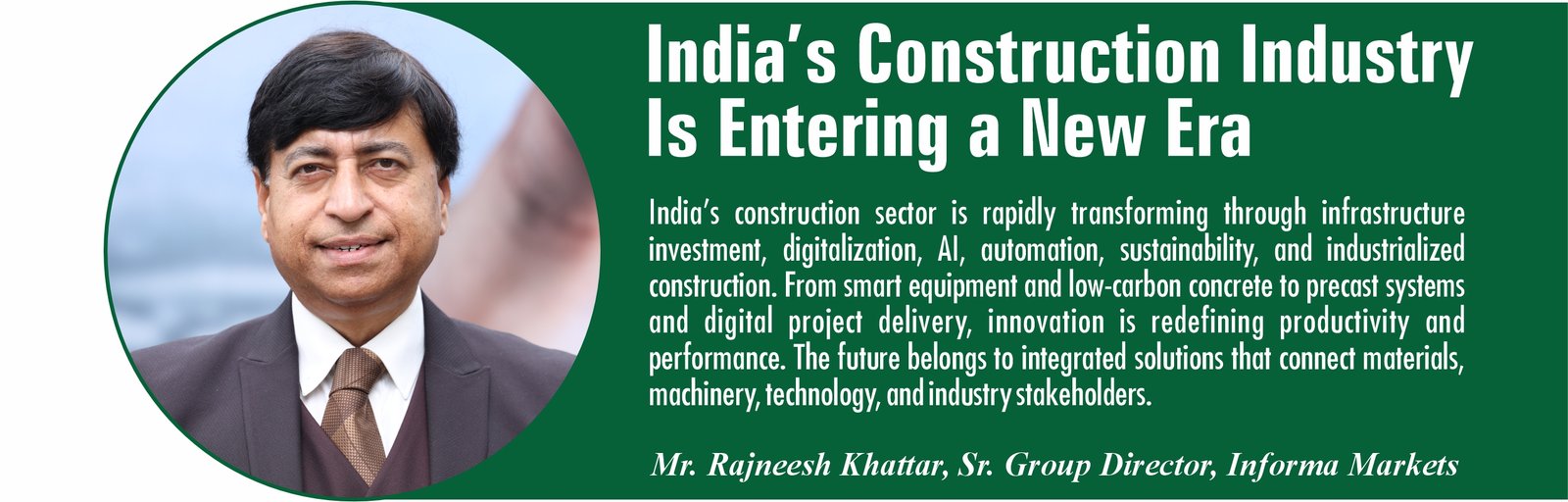
India's construction sector is entering a new phase of infrastructure-led growth. From your perspective, what are the biggest shifts currently reshaping the industry?
The Indian
construction industry is undergoing its biggest transformation in decades.
Growth is no longer being driven only by more projects—it's being driven by
faster execution, digitalization, sustainability, and industrialized
construction.
Here are
the 10 biggest shifts reshaping the industry:
- Massive Infrastructure Investment: Record government spending on highways,
metros, railways, airports, logistics parks, and urban infrastructure is
creating sustained demand across the construction value chain. Industrial corridors and manufacturing
investments are expanding alongside public infrastructure.
- Industrialized Construction (Precast & Modular): Developers are moving from traditional
cast-in-situ methods to precast concrete, modular construction, and
off-site manufacturing. Benefits include 30–50% faster
construction, better quality, lower waste, and reduced dependence on
skilled site labour.
- Digital Construction & BIM: Building Information Modeling (BIM), digital
twins, cloud collaboration, and 3D project coordination are becoming
standard on large projects. Owners increasingly expect integrated digital project delivery from
design through operations.
- AI and Automation: AI is being used for scheduling, cost estimation, risk prediction,
safety monitoring, quality inspection, and document management. Drones, IoT sensors, and computer vision are
improving site productivity and reducing project delays.
- Sustainability and Low-Carbon Materials: Demand is rising for green concrete, blended
cement, recycled aggregates, geopolymer concrete, energy-efficient
buildings, and water-saving construction. Sustainability is increasingly a business requirement rather than a
niche differentiator.
- Data Centres and Industrial Real Estate: India is witnessing strong investment in data
centres, warehouses, semiconductor facilities, and manufacturing plants. These projects require specialized concrete
solutions, flooring systems, cooling infrastructure, and high-performance
construction materials.
- Labour Shortages Driving Mechanization: Contractors face shortages of skilled labour,
pushing adoption of mechanized equipment, aluminum formwork, robotics, and
prefabrication. Companies are investing more in productivity-enhancing
technologies.
- Quality, Safety, and Lifecycle Focus: Clients now prioritize durability, lifecycle
cost, resilience, and predictive maintenance rather than only the lowest
construction cost. This increases demand for advanced
construction chemicals, waterproofing, repair systems, and monitoring
technologies.
- Rise of Specialist Decision Makers: Buying decisions increasingly involve
architects, structural consultants, project management consultants (PMCs),
EPC contractors, procurement heads, and quality teams—not just developers. Suppliers need technical selling, project
specifications, and early engagement during design.
- Innovation Becoming a Competitive Advantage: Products are now evaluated on carbon
footprint, productivity gains, digital compatibility, durability, and
lifecycle performance. Companies offering innovative
solutions are more likely to be specified in large infrastructure and real
estate projects.
These
shifts are increasing demand for:
- Construction
chemicals
- Concrete
technology
- Precast
systems
- Formwork
and scaffolding
- Rebar and
reinforcement solutions
- Digital
construction software
- AI-enabled
project management
- Equipment
automation
- Green
building materials
- Repair
and rehabilitation technologies
For World
of Concrete India, these trends create an opportunity to position the event
around four major themes:
- Digital
Construction & AI
- Low-Carbon
Concrete & Sustainability
- Precast,
Modular & Industrialized Construction
- Mega
Infrastructure & Smart Manufacturing
Q2) The
concrete and construction equipment industries are becoming increasingly
interconnected. How do you see this relationship evolving, and what
opportunities does it create for manufacturers, contractors, and project
developers?
The relationship between the concrete
industry and the construction equipment industry is
shifting from a traditional supplier–buyer model to a technology-driven
partnership. Increasingly, concrete performance depends not only on the material
itself but also on the equipment used to produce, transport, place, compact,
and monitor it. This convergence is creating significant opportunities for
manufacturers, contractors, and project developers.
A. Smart concrete needs smart equipment: The use of high-performance concrete,
self-compacting concrete, ultra-high-performance concrete (UHPC), and
low-carbon concrete requires advanced batching plants, transit mixers, pumps,
sensors, and automated placing equipment. Equipment manufacturers are becoming
solution providers, ensuring that new concrete technologies can be deployed
efficiently on site.
B. Digitalization is connecting the
entire construction ecosystem: Modern equipment is increasingly equipped with IoT
sensors, telematics, AI, and cloud connectivity. These technologies enable:
- Real-time
monitoring of concrete quality and temperature
- Predictive
maintenance of equipment
- Fleet
optimization and reduced downtime
- Data-driven
project management
The result is improved productivity, better quality
control, and lower operating costs.
C. Sustainability is driving joint
innovation: The industry's focus on reducing carbon
emissions is encouraging closer collaboration between concrete producers and
equipment manufacturers. Together they are developing:
- Energy-efficient
batching plants
- Electrified
and hybrid construction equipment
- Systems
for recycled aggregates and supplementary cementitious materials
- Technologies
that reduce material waste and improve resource efficiency
D. Precast and modular construction are
accelerating integration: Industrialized construction requires
precise manufacturing processes where concrete technology and equipment work
seamlessly together. Automated casting systems, robotic handling, curing
technologies, and digital quality control are becoming essential for precast
factories.
E. Productivity and labour shortages are
reshaping project delivery: With skilled labour becoming increasingly scarce,
contractors are investing in mechanized solutions that reduce manual work while
improving speed and consistency. Equipment manufacturers that integrate
automation with advanced concrete technologies will become strategic partners
rather than equipment suppliers.
India's expanding investments in infrastructure,
urban development, industrial parks, data centres, and renewable energy
projects will further strengthen this convergence. Success will increasingly
depend on integrated ecosystems where concrete producers,
equipment manufacturers, contractors, consultants, and technology providers
collaborate from the design stage through project execution.
For World of Concrete India, this
presents an opportunity to position the exhibition as the industry's leading
platform where materials, machinery, digital technologies, and project
stakeholders come together. Dedicated showcases on smart construction,
AI-enabled equipment, sustainable concrete, precast technologies, and
integrated project delivery will reflect the direction in which the industry is
evolving and provide exhibitors with greater value through cross-sector
collaboration.
Q3)
Exhibitions have evolved beyond product showcases to become platforms for
knowledge sharing and business collaboration. How do you see the role of trade
exhibitions changing in today's construction industry?
Trade exhibitions are no longer just venues to
display products—they have become business acceleration platforms where
innovation, knowledge, networking, and commercial opportunities converge. In
today's construction industry, where projects are becoming more complex and
technology-driven, exhibitions play a far more strategic role.
A. From Product
Display to Solution Showcase: Visitors are no longer looking only at
machines or materials; they want integrated solutions that improve
productivity, sustainability, and project outcomes. Exhibitions enable
companies to demonstrate complete construction ecosystems by combining
equipment, materials, software, and services.
B. A Platform for
Knowledge Exchange: With rapid advancements in AI, digital construction, precast
technologies, low-carbon concrete, and automation, industry professionals need
continuous learning. Conferences, technical seminars, live demonstrations, and
expert-led discussions help bridge the gap between innovation and
implementation.
C. Business
Matchmaking Rather Than Footfall: The success of an exhibition is
increasingly measured by the quality of business meetings and project
opportunities rather than visitor numbers alone. Structured buyer-seller
meetings connecting architects, consultants, contractors, EPC companies,
procurement heads, and developers with exhibitors are delivering measurable
business outcomes.
D. Driving Innovation
and Collaboration: Construction today requires collaboration across the entire value chain.
Trade exhibitions provide a neutral platform where manufacturers, technology
providers, consultants, academia, startups, and government agencies can
collaborate to solve industry challenges and accelerate innovation.
E. Supporting
Sustainability Goals: As the industry moves toward greener construction, exhibitions play a
vital role in showcasing sustainable products, low-carbon technologies,
circular economy solutions, and best practices that help companies meet ESG and
regulatory requirements.
F. Creating Year-Round
Industry Engagement: The role of exhibitions now extends
beyond the event dates. Digital platforms, webinars, regional roadshows,
technical workshops, and online networking enable organizers to engage the
industry throughout the year, making exhibitions continuous business
communities rather than annual events.
Going forward, the most successful exhibitions will
be those that combine technology, education, and business opportunities in
one platform. Success will be measured not only by exhibition space sold or
visitor attendance, but by the partnerships formed, projects initiated,
innovations adopted, and business generated.
At World of Concrete India, this
evolution presents a significant opportunity. By integrating technical
conferences, CEO and CTO leadership forums, hosted buyer programs, innovation
showcases, live equipment demonstrations, and curated buyer-seller meetings,
the event position itself as India's leading knowledge and business
platform for the concrete and construction ecosystem, delivering value to
exhibitors and visitors long after the exhibition concludes.
Q4) What distinguishes a successful exhibitor at a major trade
exhibition? Is it the size of the stand, product innovation, customer
engagement, or something else
A
successful exhibitor is not defined by the size of the stand, but
by the quality of the business outcomes achieved. The most
successful companies combine innovation, engagement, and a clear commercial
strategy to maximize their return on investment.
Here are the key differentiators:
A. Clear Business
Objectives: Successful exhibitors enter the exhibition with defined goals—whether
it's launching a new product, generating qualified leads, meeting existing
customers, entering new markets, or building brand visibility. Every activity
is aligned with these objectives.
B. Product Innovation
with Real Business Value: Innovation attracts attention, but it
must solve real industry challenges such as improving productivity, reducing
costs, enhancing sustainability, or increasing safety. Demonstrating practical
applications is far more impactful than simply displaying products.
C. Meaningful Customer
Engagement: The best exhibitors create interactive experiences through live
demonstrations, case studies, technical discussions, and expert consultations.
Visitors remember experiences that help them solve problems rather than static
product displays.
D. The Right Audience: Meeting
decision-makers is more valuable than attracting large crowds. Engaging
architects, consultants, contractors, developers, EPC companies, and
procurement heads who influence purchasing decisions significantly improves
conversion rates.
E. Well-Trained Sales
and Technical Teams: Knowledgeable teams that understand customer challenges, qualify leads effectively,
and provide technical solutions create stronger business relationships than
attractive stands alone.
F. Effective Pre-Show
and Post-Show Strategy: Successful exhibitors begin engaging
customers well before the exhibition through invitations, appointments, and
marketing campaigns. Equally important is disciplined post-show follow-up to
convert conversations into business opportunities.
The future of exhibition success will increasingly
be measured by return on objectives rather than return on space.
While stand design helps attract visitors, innovation, meaningful
engagement, strategic networking, and disciplined follow-up ultimately
determine success.
For events like World of Concrete India,
exhibitors that actively participate in buyer-seller meetings, technical
conferences, live demonstrations, innovation showcases, and networking programs
are likely to generate stronger business outcomes than those relying solely on
large exhibition stands. This integrated approach enables companies to build relationships,
influence project specifications, and position themselves as long-term partners
in the construction ecosystem.
Q5)
Exhibitors today expect measurable business outcomes rather than just visitor
footfall. How is Informa Markets adapting its events to meet these evolving
expectations?
The expectations of exhibitors have fundamentally
changed. Today, success is measured by the quality of business generated rather
than the quantity of visitors. At Informa Markets, we are continuously evolving
our events from exhibition platforms into business enablement ecosystems that
deliver measurable ROI.
We are
placing greater emphasis on curated buyer-seller meetings, ensuring exhibitors
engage with architects, consultants, developers, EPC contractors, procurement
heads, and other key decision-makers who influence purchasing and project
specifications. These structured interactions provide exhibitors with qualified
business opportunities instead of relying solely on walk-in traffic.
Knowledge
sharing has also become a key differentiator. Through CEO and CTO forums,
technical conferences, innovation theatres, and live product demonstrations,
exhibitors can position themselves as thought leaders, showcase their
expertise, and engage customers in meaningful technical discussions rather than
traditional sales pitches.
In
addition, we are strengthening our digital engagement before, during, and after
the event. AI-powered matchmaking, online exhibitor directories, appointment
scheduling, mobile event applications, and post-event analytics enable
exhibitors to connect with prospects throughout the year and measure the
effectiveness of their participation.
Another
important focus is building stronger industry communities by collaborating with
associations, government bodies, academia, startups, and industry experts. This
creates a richer ecosystem where innovation, collaboration, and business
opportunities come together.
For World
of Concrete India, our vision is to create an event where every exhibitor has
access to the right buyers, the right knowledge, and the right networking
opportunities. By
integrating hosted buyer programs, structured business meetings, leadership
summits, technical conferences, and innovation showcases, we aim to ensure that
exhibitors leave not only with brand visibility but with qualified leads,
project opportunities, strategic partnerships, and measurable business
outcomes.
Ultimately,
the future of exhibitions is not about attracting the largest crowd—it's about
delivering the highest business value. That is the direction in which Informa
Markets is investing, ensuring our events remain indispensable platforms for
business growth and industry transformation.


Current Issue

10-2026
