


Geosynthetics Solution for Slope Protection
Slope protection refers to measures taken to safeguard and manage surface slopes to prevent damage, sliding, or collapse from natural disasters. Instability in slopes can cause severe harm to the surrounding environment, such as traffic congestion and casualties, as well as significant economic losses.
Slope protection encompasses all those actions and measures to prevent erosion on a slope and enhance slope stability, and thus contain the detachment or sliding of soil and rocks from the slopes. Its main purpose is preserving the integrity of the slope structure, preventing accidents and avoiding material damage or human life losses.
Geosynthetics offers solutions for efficient slope stabilization and erosion control. Whether it is retaining walls, landslide stabilization, or slope enlargement. Slope stability is the ability of a slope to resist sliding or collapsing due to gravity, water, or external forces. Geosynthetics can improve slope stability by reinforcing the soil, draining the excess water, or providing a frictional interface and enhancing load-bearing capacity. Erosion control is the prevention or reduction of soil loss due to water, wind, or human activities. Geosynthetics can help control erosion by protecting the soil surface, reducing the runoff velocity, or promoting vegetation growth.
Geotextile
Geotextiles, as a key geosynthetic material, play an irreplaceable role in slope protection and erosion control due to their superior performance and wide applicability. Geotextiles are permeable fabrics that can separate and filter different soil layers, prevent clogging, and reduce pore water pressure.
Geotextiles can effectively prevent soil erosion and the impact of water flow on slopes. When rain or surface runoff erodes a slope, geotextiles intercept water droplets and reduce their impact force, thus decreasing the rate and extent of soil erosion. The high strength and durability of geotextiles form a stable protective layer on slopes, dispersing stress and enhancing stability.
Geotextiles have good permeability and drainage properties, which help drain moisture from within the slope, reduce groundwater levels, and minimize the risk of slope instability due to excess moisture. Additionally, they prevent soil shrinkage caused by water evaporation, maintaining slope stability.
Moreover, geotextiles promote turf growth, enhancing the slope's appearance and further improving its erosion resistance, creating a natural ecological barrier.
Geogrid
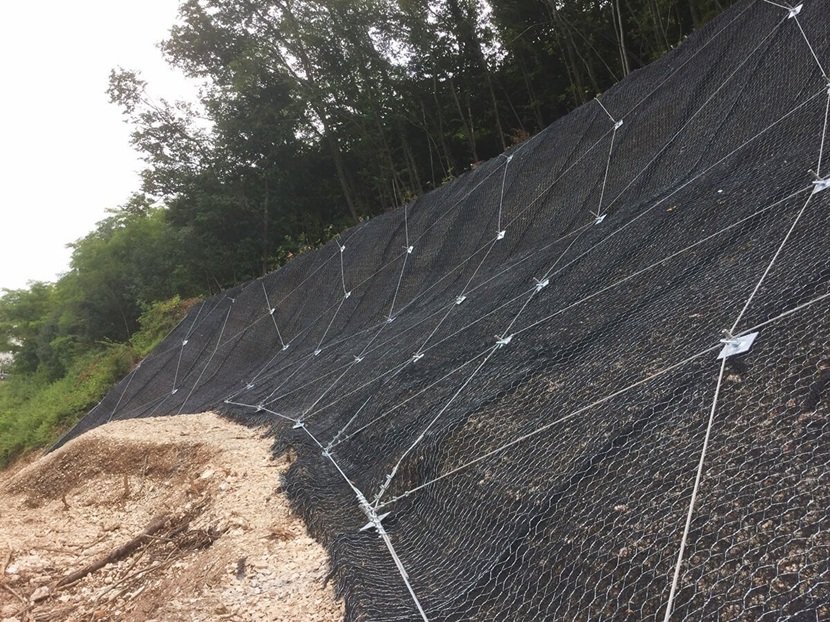
Geogrids are geosynthetic materials designed to reinforce soils and improve their mechanical properties. Made from polymers such as polyethylene or polypropylene, geogrids are available in uniaxial, biaxial, and triaxial forms. The net-like grid structure provides significant tensile strength, which is essential for distributing loads and reducing soil deformation.
For slope stabilization projects, geogrids provide essential support by reinforcing the soil and preventing landslides. Their use in slope reinforcement has shown remarkable success in maintaining slope integrity, even under adverse weather conditions. Slopes stabilized with geogrids can be built at almost any angle to provide the most economical use of space. Geogrids are particularly useful in areas prone to erosion and soil instability.
In case of slope erosion protection, geogrids can either retain rainwater or delay their flow along the slope. Therefore, they eliminate the appearance of rutting, one of the main causes behind the effects of erosion. On the other hand, their honeycomb shaped mesh structure facilitates water retention, thereby promoting root growth.
Geomembrane
Geomembranes are often deployed in multiple layers or with additional reinforcement to enhance slope stability and resistance to erosion.
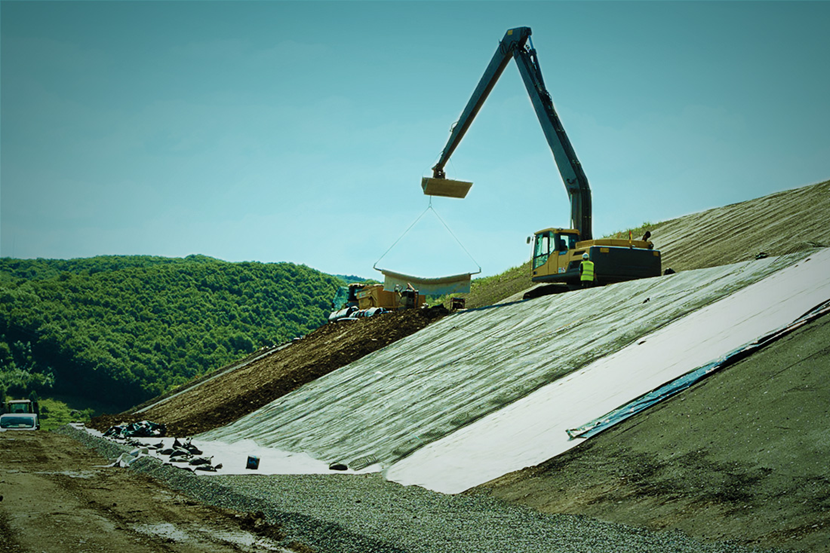
By laying a geomembrane, a protective layer can be formed on the slope surface to prevent soil erosion and damage from rainfall and other external factors. It can effectively prevent water erosion, wind erosion and soil movement under gravity. This helps maintain the integrity and long-term stability of slopes.
By installing a geomembrane on the surface of a slope or in its middle layer, drainage channels can be formed to help remove accumulated water on the slope, reduce the impact of water on the soil, and maintain the stability of the slope.
Geomembrane layer on the slope also provide a stable foundation for the growth of vegetation and reduce water evaporation and soil erosion. This helps promote vegetation growth and ecological restoration of the slope.
Geocells
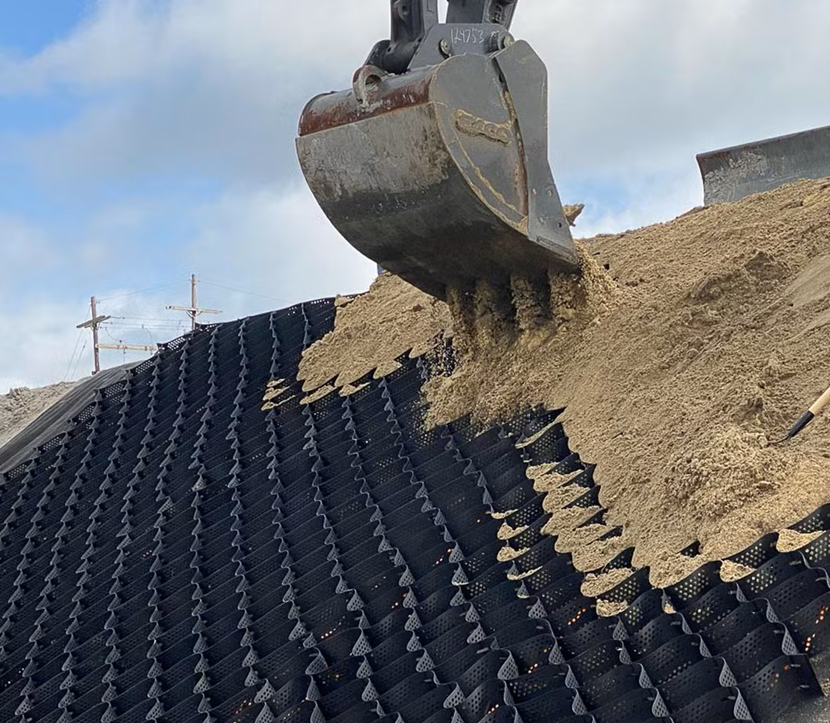
The Geocell grid for slope protection is an effective and economical solution to challenging slope-surface stability problems. It can confine and reinforces the upper soil layer and infill controlling down-slope movement and slippage due to hydrodynamic and gravitational forces, and meet a wide range of performance and aesthetic requirements with select infill.
Geocells along with anchoring techniques ensure the long-term stability of slopes using vegetated topsoil, aggregate, or concrete surfacing. The enhanced drainage, frictional forces, and cell-soil-plant interaction prevents downslope movement and limit the impact of raindrops, channelling, and hydraulic shear stresses.
Geocell effectively controls erosion as the cells prevent movement of the infill. The confined infill therefore acts as a counterweight on sloped areas and improves stability. Perforations in the 3D cellular confinement system allow the passage of water, nutrients, and soil organisms. This encourages plant growth and root interlock, which further stabilizes the slope and soil mass, and facilitates landscape rehabilitation.
Gabions
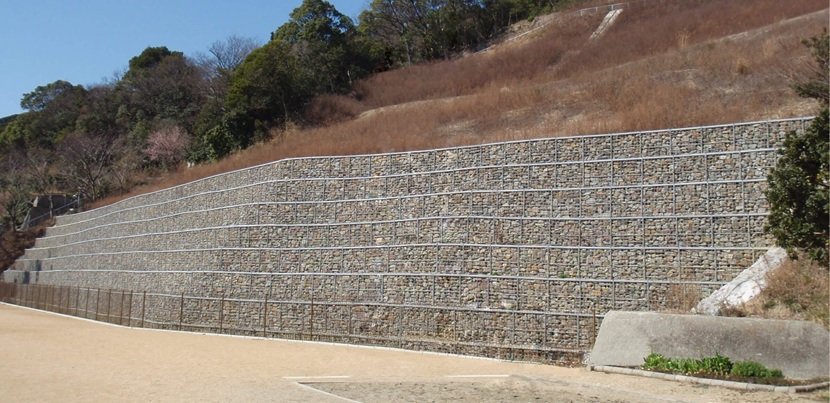
The gabion mattresses and gabion baskets reinforce slope systems and provide mechanical stability. They are environmentally friendly and also promote the growth of natural vegetation.
Gabions are used for slope stabilization and erosion control. They are constructed by filling the cages with stones. The stones act as a barrier and prevent the soil from moving up and down the slope. For slope stabilization, gabions act as retaining walls that support and stabilize loose soil or rock, preventing landslides and soil erosion, especially in areas prone to heavy rain or seismic activity.
In addition to protecting slopes, gabions are used to mitigate landslides. In areas where there is a risk of landslides occurring, gabions are placed on the soil to create a check dam. The dams slow and direct the flow of water, thereby preventing landslides. The soil does not get overly saturated and therefore cannot break away by controlling the water flow. The gabions also provide stability to the area around them. They keep the ground in place while allowing water to flow freely, keeping the soils where they belong.
Geobags
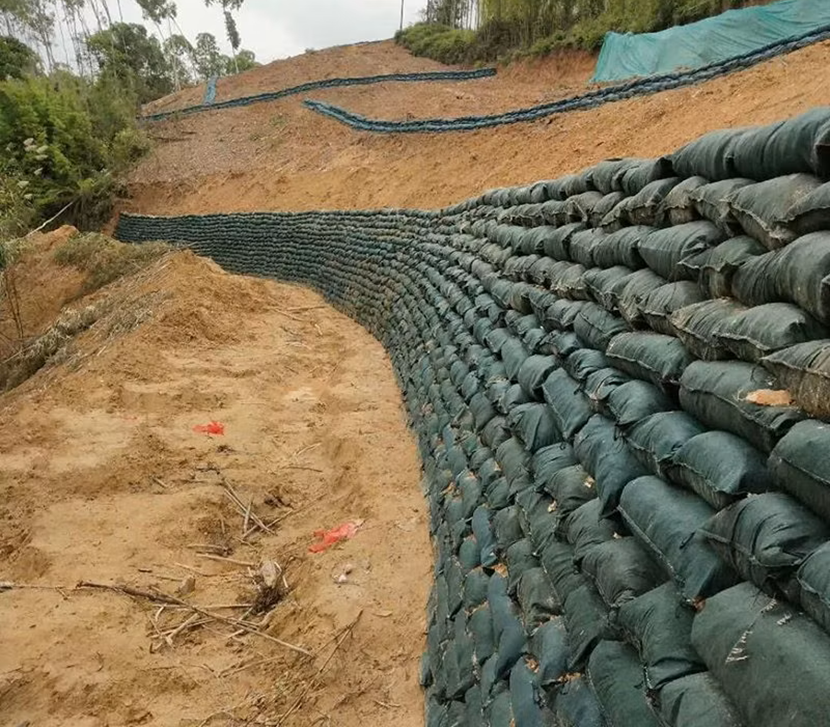
Geobags are an innovative solution in modern engineering, widely used for slope protection and erosion control in various environments. These geotextile bags filled with sand or soil provide a sustainable method to stabilize slopes and manage erosion, especially in coastal, riverbank, and construction areas.
Geobags can effectively prevent slope soil from being washed away by rain, wind erosion or erosion caused by other natural factors. By filling geobags with materials such as soil or gravel and stacking them layer by layer on the slope that needs protection, a continuous and stable protective layer can be formed.
Reinforcement materials such as geogrids or geotextiles can be added to the inside of geobags to enhance their overall strength and stability. The stacked geobags can form a more solid structure that effectively resists the sliding and collapse of the slope, thereby strengthening the slope structure.
Geobags have good water permeability, which means that when rainwater or other water sources come into contact with the slope, the moisture can penetrate into the ground through the gaps in the geobags, thereby avoiding the instability of the slope caused by water accumulation. At the same time, the air permeability of geobags also helps to keep the slope dry and stable.
Planting vegetation on geobags can further strengthen the slope surface. The roots of vegetation can penetrate deep into the soil, increasing the shear strength and stability of the soil.
Related Articles


Current Issue

10-2026
