


Nepal: Promising Market for Construction Equipment
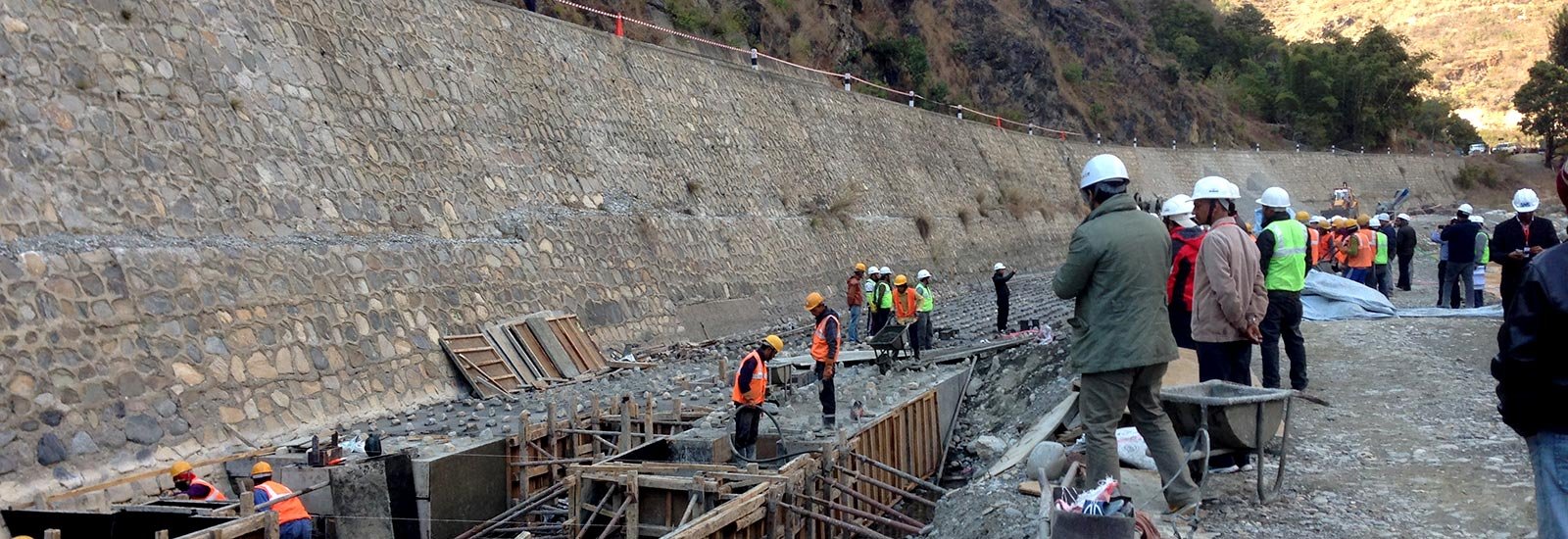
Infrastructure development
plays a crucial role in the economic development of any country, and Nepal is
no exception. Nepal, a landlocked country nestled in the heart of the
Himalayas, is striving to enhance its infrastructure to stimulate economic growth,
reduce poverty, and improve the quality of life for its citizens.
As a landlocked country
with diverse geography and challenging terrain, Nepal heavily relies on a
well-developed infrastructure to overcome geographical barriers, connect
regions, and drive economic activities. The country's infrastructure has been
impacted by several challenges but despite these challenges, the government of
Nepal has taken some steps towards improving infrastructure development in the
country.
In recent years, Nepal has
made tremendous progress in infrastructure development, with an emphasis on
improving transportation, electricity, and urban growth. Several major
construction projects have been conducted to strengthen the country's
infrastructure development.
Private sector involvement
has become increasingly important in the infrastructure development in Nepal.
The government has been encouraging private sector participation in the
development of infrastructure projects through various initiatives and
policies.
One of the major
initiatives taken by the government to involve the private sector in
infrastructure development is Public-Private Partnerships (PPPs). PPPs provide
an opportunity for the private sector to invest in infrastructure projects and
work together with the government to develop and maintain the infrastructure.
The government has also introduced policies and regulations to make it easier
for private companies to participate in infrastructure development projects.
The Government of Nepal and
the World Bank jointly launched the $275 million (equivalent to NRs. 34.96
billion) Accelerating Nepal’s Regional Transport and Trade Connectivity
(ACCESS) Project this year. It will help improve trade and connectivity by
reducing trade and transport costs and transit time along selected corridors in
Nepal.
The Ministry of Physical Infrastructure
and Transport (MoPIT) has laid down 12 priorities for the next five years with
a high emphasis on transport infrastructure development. Among the priorities
are expansion and completion of four east-west highways, a total of 1758 km
consisting of Postal highway and 31 north-south roads of Terai. Completion of
construction with blacktop. Complete the construction of 1879 km of Pushpalal
mid-hill highway. East West Electric Railway project and Kathmandu Valley Metro
Rail Project.
The Government of Nepal has
launched several initiatives aimed at improving rural infrastructure, including
the Rural Electrification Program, Rural Road Connectivity Program, and the
Safe Drinking Water and Sanitation Program. Simultaneously focussing on urban
infrastructure, the government has allocated a budget of NRs 66.17 billion for
projects under the Ministry of Urban Development in the Fiscal Year (FY)
2023/24.
Other notable projects
under implementation includes- Gautam Buddha Regional International Airport,
Pokhara Regional International Airport and Second International Airport at Bara
in Airport sector; Sikta Irrigation Project, Babai Irrigation Project and
Rani-Jamariya-Kularia Irrigation Project in irrigation sector, and Upper
Tamakoshi Hydropower Project, Budhigandaki Hydropower Project, West Seti
Hydropower Project in power and energy sector.
In conclusion, Nepal's infrastructure construction projects industry have gained momentum in recent years and is currently experiencing steady growth, driven by government support, foreign investment, seeking international aid and support, and public-private partnerships. The government has prioritized infrastructure development implementing new policies to improve connectivity, create jobs, and attract foreign investment. The industry outlook for the coming years appears promising, with numerous opportunities for both local and international investors.
Related Articles




Current Issue

10-2026
