


Green Geosynthetics Biodegradable Natural Fibers and Biopolymers
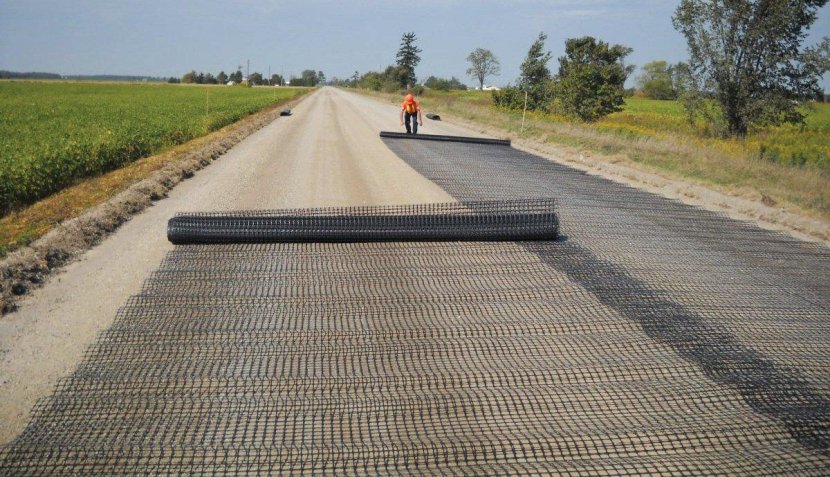
Geosynthetics
have been widely used in construction for decades due to their ability to
improve soil stabilization, drainage, erosion control and other foundational
functions. Traditionally, these materials have been manufactured from
petroleum-based products, such as polypropylene, polyethylene and polyester,
which contribute significantly to carbon emissions, environmental pollution and
resource depletion. The manufacturing of geosynthetics from petroleum-based
materials has a high energy demand, which contributes significantly to the
carbon footprint of these products.
The
increasing demand for sustainable practices in the construction industry has
led to the development and adoption of eco-friendly geosynthetics, materials
designed to minimize environmental impact while maintaining performance
standards. One of the most promising developments is the creation of
biodegradable geosynthetics. These materials are designed to break down over
time, reducing long-term environmental impact, especially in applications like
erosion control or temporary soil stabilization. Some biodegradable
geosynthetics are made from natural fibers like jute, coir, or hemp, while
others use biodegradable polymers derived from plants, animals, or microbes.
Natural
fibers as geosynthetics
Natural
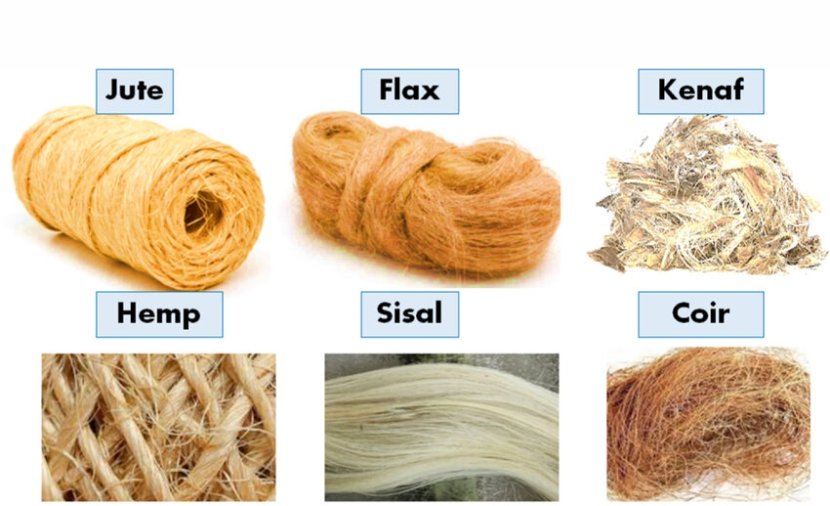
fibers like jute, coir, sisal, hemp, kenaf, bamboo and palm are used in
geosynthetics for soil reinforcement, enhancing soil stability, shear strength,
and load-bearing capacity while offering environmental benefits such as
renewability and biodegradability. These natural geotextiles are eco-friendly,
biodegradable, and cost-effective alternatives to synthetic materials, though
challenges with durability and consistent performance exist due to natural
variations and aging effects.
Jute
fiber from the jute plant is widely used to create geotextiles and nets. It has
a lower lignin content, which makes it faster to biodegrade than coir, and is
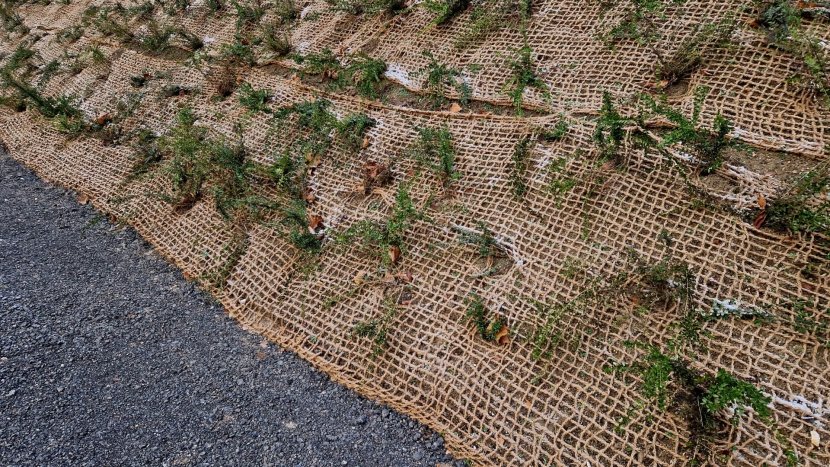
especially useful for erosion control where rapid vegetation establishment is
needed. Coir fiber, extracted from coconut husks, has a high lignin content,
making it highly resistant to biodegradation and more durable than jute. It is
commonly made into nets, mattresses, and geotextiles for soil reinforcement and
erosion control.
Sisal,
derived from the leaves of the Agave sisalana plant, is known for its high
strength. It is used for soil reinforcement, particularly in problematic or
low-bearing capacity subgrades. Hemp fiber from the hemp plant is used for soil
reinforcement and in composites. Research has shown that it can increase the
shear strength and overall resilience of soil. Kenaf fiber with high mechanical
properties is used as a natural geotextile, often in composites to improve soil
strength. Known for its high tensile strength and ductility, bamboo fibers can
be used to improve the California Bearing Ratio (CBR) of soil and enhance
subgrade strength. Fibers from palm trees have been shown to increase the
strength and bearing capacity of subgrade soil, particularly when mixed into
the soil.
Functions and Applications
Soil
Reinforcement
Natural
fibers can be mixed directly with soil or laid in layers to increase its
strength and stability. The fibers act similarly to rebar in concrete,
reinforcing the soil matrix by forming a composite material. This enhances the
soil's tensile strength, bearing capacity, and shear resistance. Common
applications include stabilizing slopes, reinforcing subgrades for roads and
railways, and improving the stability of foundations.
 Drainage
and Consolidation
Drainage
and Consolidation
Natural
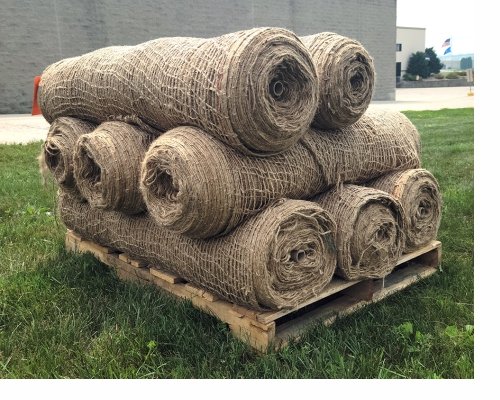
fibers, woven into prefabricated vertical drains (PVDs), can enhance the rate
of consolidation in soft, compressible soils. The porous fiber drains provide a
path for excess pore water to escape from the soil, accelerating the
consolidation process. They have been shown to have sufficient discharge
capacity and perform well even under high confining pressure. They are used in
infrastructure projects on soft ground, such as embankments and reclamation
areas, to reduce settlement.
Erosion
control and Filtration
Geotextiles,
nets, and mats made from natural fibers are used to protect soil surfaces from
erosion and act as filters. The fibrous material slows down water flow, traps
soil particles, and prevents the formation of erosive channels. They also
promote vegetation growth by creating a favourable microenvironment for seeds
and roots. Applications include protecting riverbanks, stabilizing slopes, and
controlling surface erosion in landscaping projects.
Limitations
of natural fiber geosynthetics
Susceptibility
to biodegradation limits the lifespan of natural fiber geosynthetics, making
them unsuitable for permanent structures. Fibers can degrade due to exposure to
elements like sunlight (UV resistance) and moisture, leading to strength loss
over time. Natural fibers can be prone to attack by fungi and bacteria, further
reducing their mechanical properties and service life. They have poor
compatibility with hydrophobic polymer matrices, leading to weak interfacial
adhesion and inefficient load transfer. Further, High moisture absorption
causes swelling and degradation, affecting their mechanical performance and
durability.
Biopolymers
as geosynthetics
Biopolymers
are gaining interest as sustainable alternatives to traditional petroleum-based
geosynthetics, offering improved soil properties such as increased strength,
reduced permeability, and enhanced erosion control. They are natural polymers
such as guar gum, xanthan gum, lignin, alginate, chitosan, and starch, produced
by living organisms: plants, animals, or microbes. Biopolymers function
primarily by forming hydrogels and creating a strong bond between soil
particles.
Micro-organism
based biopolymers like Xanthan gum and Gellan gum are produced through
bacterial fermentation and are among the most common biopolymers used for soil
stabilization. Xanthan gum is an anionic polysaccharide that forms viscous,
pseudo-plastic solutions, significantly enhancing soil shear strength and
erosion resistance. It has been shown to be effective for stabilizing slopes
and mine tailings. Gellan gum is a high-molecular-weight polysaccharide that
forms durable gels. It is also used to enhance soil properties and has shown
excellent results in both sand and clay.
Plant
based biopolymers includes Guar gum, Cellulose, Lignin and Polylactic Acid
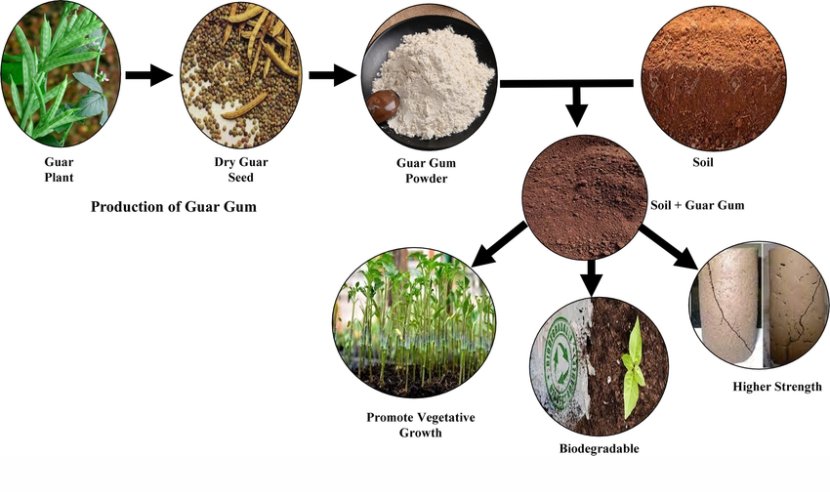
(PLA) that are sourced from plants and agricultural waste. Guar gum is
extracted from the guar plant, this polysaccharide forms cohesive hydrogels
that improve the bonding and strength of soil particles. Cellulose, found in
plant cell walls, can be processed into bioplastics for geotextile production.
Cellulose-based materials have shown competitive mechanical and durable
performance. The second most abundant biopolymer after cellulose is lignin, it
is a natural adhesive that can link soil particles together and reduce soil
porosity. Polylactic Acid (PLA) is a bioplastic made from renewable resources
like corn starch or sugarcane, PLA can be formed into biodegradable geogrids
for reinforcing soil.
Animal
derived biopolymers come from animal sources, such as shells or milk products.
Chitosan is a cationic polysaccharide derived from crustacean shells that can
bind to negatively charged clay particles. Its antibacterial properties also
make it useful for environmental applications.
Limitations
of biopolymer geosynthetics
While promising, the use of biopolymers as geosynthetics still faces several hurdles that limit their widespread adoption. Biopolymer production can be more expensive than synthetic polymers, and raw material prices can fluctuate. The biodegradability of biopolymers can be a disadvantage when long-term strength is required. Their performance can also degrade under exposure to UV radiation and repeated wetting-drying cycles. The effectiveness of biopolymers varies greatly depending on the soil type, environmental conditions, and the specific biopolymer used. Some biopolymers exhibit poor performance when in contact with water, with their hydrogel bonding properties diminishing over time.




Current Issue

10-2026
