


Geosynthetics Industry in India Poised for Strong Growth

The India Geosynthetics
market has seen substantial growth in recent years and is expected to excel
further in future, driven by increasing infrastructure development, sustainable
construction practices, environment concerns, advancements in geosynthetic technologies,
and expanding applications across various sectors.
Geosynthetics refer to
artificial polymeric (plastic) products that provide solutions for various
geotechnical problems during construction projects. They are available in
different forms, such as strips, three-dimensional structures, or planar. They
are designed to perform specific functions such as stabilization, separation,
reinforcement, drainage, filtration, containment of liquids, and erosion
control. Some products are even designed to provide multiple functions.
Geosynthetics have become increasingly popular in civil engineering due to
their ability to improve and enhance various construction works.
The use of geosynthetics
offers various advantages. For instance, it helps reduce the cost of
construction materials and installation work. They resist corrosion and are
robust and long-lasting. Geosynthetics are regarded as an all-purpose,
environmentally benign material suitable for various applications in
construction, facilitating expedited work. They offer higher quality, quicker
adoption and lower life-cycle costs for all infrastructure construction
projects. Additionally, they reduce the chance of human errors and have easy
design methodologies. They ensure consistency over a wide range of soils and
have minimal need of regular repair.

There are nine main types
of geosynthetics available in the market. They include geotextiles, geogrids,
geocells, geonets, geomembranes, geopipes, geofoam, geocomposites, and
geosynthetic clay liners. Each of these geosynthetic types differs in the way
it’s designed and created.
Geotextiles are known for
their tensile strength, as well as for their excellent mechanical and hydraulic
properties which help in maintaining the stability of the road and railway
embankments, earth dikes, and coastal protection structure. Also, geotextiles
can perform multiple functions such as filtration, drainage, separation of soil
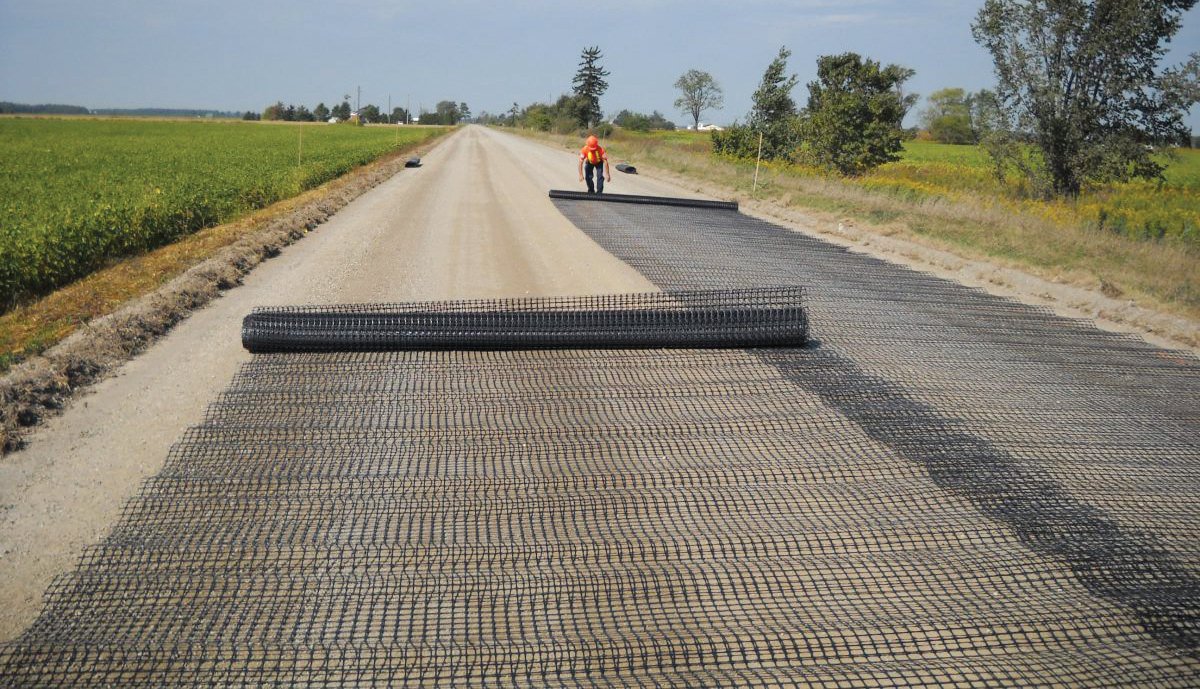
layers, reinforcement, or stabilization. Geogrids are increasingly used in
railway and road infrastructure development for reinforcement of structural
bases over soft soils on account of their exceptional bearing capacity.
Moreover, geogrids are used in retaining walls for reinforcement of railway
abutments and bridges.

Due to their capacity to
disperse loads over a broader area, geocells are used in construction projects
to limit degradation on steep slopes, as retaining walls, and as a sub-base
reinforcement for road bases, railway tracks, etc. Geonets are incorporated as
separation media in the collection of landfill leachates, foundation wall
systems in drainage, road, and pavement drainage systems, and methane gas
collection. Geomembranes are polymer sheeting that is used to line landfills,
canals, and tunnels trod to keep the upper layer in position and prevent the
dumping of debris.
Geosynthetic Clay Liner is
a kind of geosynthetic material used for anti-seepage of artificial lake
waterscape, landfill, underground garage, roof garden, pool, oil depot, and
chemical storage yard. Geopipes are polymeric pipes that are used in the
construction sector to facilitate the drainage of liquids and gases. Geofoam,
also referred to as expanded polystyrene, is a durable, light weight material
that’s created via polymeric expansion of polystyrene. It’s used in a wide
range of applications as an alternative to soil backfill.

Growing
construction industry in India is expected to drive the geosynthetics market
and increase their demand.
Throughout the construction
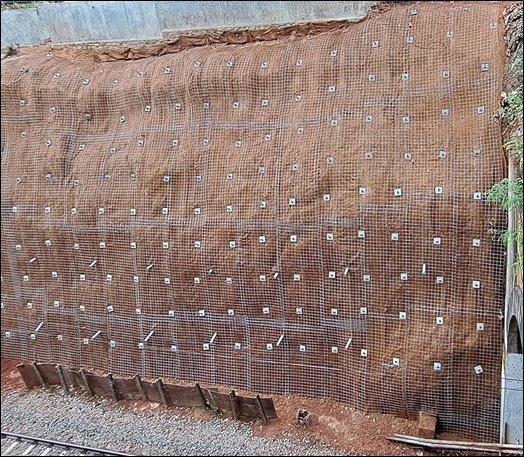
process, geosynthetic materials are used to mitigate erosion, strengthen
infrastructure, control evaporation and improve drainage, all of which increase
the longevity and safety of structures. These materials are essential for
stabilisation, reinforcement and subgrade separation. They also help in
streamlining the construction process, which extends the life of the structures
and lowers the need for maintenance.
The
government's push for infrastructure modernization and effort in promoting
geosynthetics is expected to continue driving market growth.
One of the primary drivers
of the India Geosynthetics market is the government's focus on infrastructure
development. Initiatives such as the Smart Cities Mission, Bharatmala
Pariyojana, and various urban and rural development projects are creating
significant demand for geosynthetic materials. These projects require robust
solutions for soil reinforcement, drainage, and containment, making
geosynthetics an integral component of modern construction practices.

The government is promoting
the use of geosynthetics products in infrastructural development projects,
environmental projects, wastewater management, mining, and other such
applicable fields. The government of India is increasing its investment in
projects of housing, safe drinking water, healthcare infrastructure,
educational institutes infrastructure, railways, airports, bus terminals,
metro, irrigation project, dam constructions, etc. and it is promoting to
increase the use of geosynthetics for improved strength. Thus, increased
government support will drive the geosynthetics industry and would help in
increasing the geosynthetics market share.
Growing
expenditures in the management of waste can be attributed to the enlargement of
the geosynthetics market
Rapidly increasing
population and urbanization are contributing to growing levels of solid and
liquid wastes across the country. Increasing environmental understanding
increases demand for appropriate waste and water management projects.
Geosynthetics are employed as landfill caps to stop the migration of fluids
into landfills by reducing or destroying the post-closure years of leachate and
associated treatment costs. Geosynthetics are widely used in different water
management activities owing to the increasing public concerns about severe and
widespread water pollution. Geosynthetics liner systems are utilized in waste
treatment lagoons at wastewater treatment plants to save water resources,
including lakes, rivers, ponds, aquifers, and reservoirs which are expected to
boost the demand for geosynthetics.

The
growing awareness of sustainability and the need for eco-friendly construction
materials are driving the adoption of geosynthetics.
The increased focus on
sustainable construction practices has significantly contributed to the growth
of the India Geosynthetics market. Geosynthetics are increasingly being used in
environmentally friendly projects, such as landfill liners, wastewater management,
and erosion control. These materials help reduce the environmental impact of
construction activities by providing efficient solutions for waste containment
and soil stabilization.
Rising
demand from mining industry to boost the growth of geosynthetics market
In the mining sector,
geosynthetic materials are used in creating waste barriers for the mining
by-product. Mining produces solid wastes such as tailings and waste rock during
the entire process, waste containment, and disposal. Geomembrane liners are
significantly used in the mining industry for lining solutions, mainly
evaporation ponds, heap leaching, and tailings impoundments. About 40% of the
global geomembrane production is used by the mining sector. The use of
geosynthetics in mining operations grows annually, as mining companies focus on
the technical and economic advantages of geosynthetics. These materials have
enabled more efficient barriers, stronger access roads, space-saving and
safety-enhancing retaining structures, and much more.
Development
of innovative geosynthetics is increasing their market share and applications
Advancements in
geosynthetic technologies have significantly impacted the India Geosynthetics
market, leading to the development of innovative products with enhanced
performance characteristics. Modern geosynthetics offer superior strength,
durability, and resistance to environmental factors, making them suitable for a
wide range of applications. Innovations in manufacturing processes and material
science have resulted in geosynthetics that can meet the specific needs of
complex engineering projects, further broadening their application scope.
Related Articles


Current Issue

10-2026
