


A Rough Terrain Forklift Can Ease Material Handling At Construction Sites
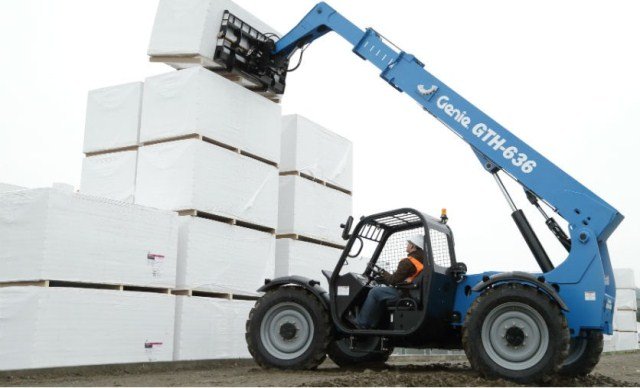
Construction projects
require building and construction materials, which need to be moved around the
jobsite as activities and locations change. Although wheel loaders and
excavators can often handle the job, they are usually engaged employed in
high-production activities. It is better to get a forklift for pick and carry,
trailer loading/unloading and placing needs.
A forklift used at the
construction sites is a type referred as rough terrain forklift. Designed to
travel across uneven terrain, rough terrain forklifts are just like regular
warehouse forklifts, in some ways. Functionally, they’re very similar. Each has
forks, tires, cabin controls, safety mechanisms, the whole works. But rough
terrain forklifts are specifically designed to manoeuvre over rugged, uneven,
and difficult terrain while lifting heavy loads safely, so it has pneumatic
tires, stronger axles and greater bounce absorption for a smoother ride. These
forklifts are designed with deeper tire treads, enhanced manoeuvrability,
stability features, and increased load capacities that make them ideal for
material handling at construction sites.
With their advanced
hydraulic systems and specialist soft tyres providing ultimate traction across
dirt and uneven ground, rough terrain forklifts are able to complete the same
wide range of tasks as a standard warehouse forklift with the added bonus of
being able to operate across any terrain.
The traction achieved in
rough terrain forklifts is from a four- or two-wheel drive train, with large
off-road tires and an articulating axle. Compared with traditional forklift
tires, the tires on rugged terrain have deeper grooves that help increase the tire’s
contact with the ground. Also, the articulating axles can have up to a
seven-degree lateral change in the elevation of the tires. The improvement in
traction helps with maintaining the forklift’s stability.
Today, rough terrain
forklifts are a common sight on construction projects. They handle everything
from pallets of concrete block to stacks of plywood to roof beams. Rough
terrain forklifts are suitable for a wide range of surfaces. Roads, beaches,
and building sites are all easily matched by these powerful machines.
The rough terrain forklift
has three main types: the vertical mast, the variable reach, and the truck or
trailer-mounted forklift.
Vertical-Mast
Rough-Terrain Forklift
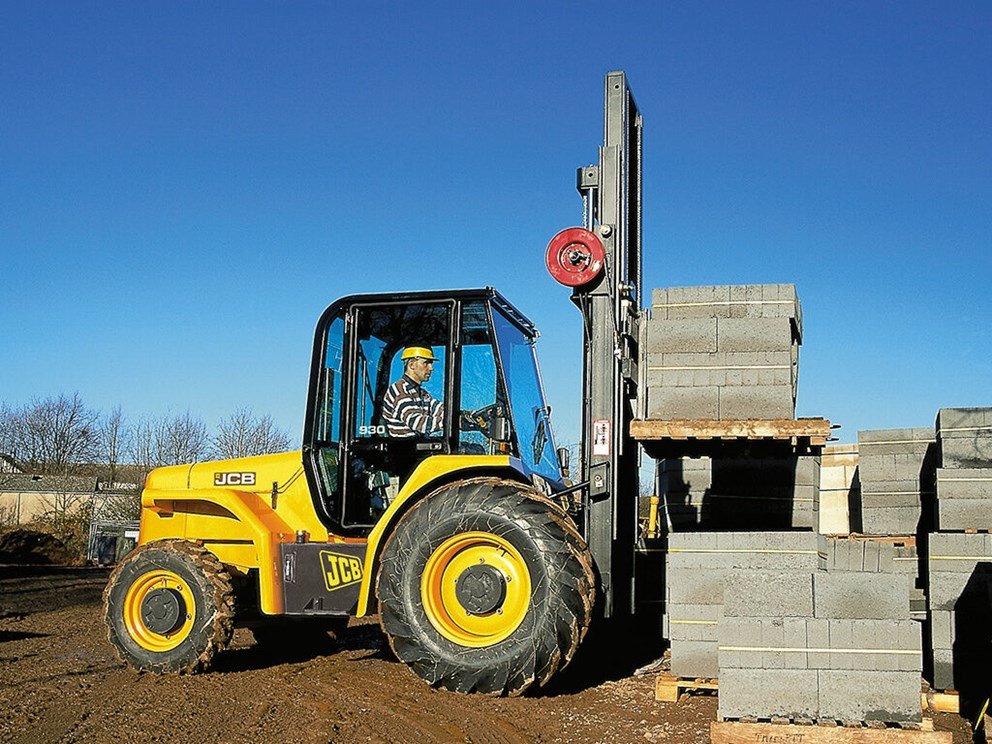
These forklifts are
designed to lift loads straight up and down. Since they aren’t intended for
indoor use, they do not have free lift, which means that the forks won’t rise
without the second stage of the mast rising as well. These machines have two
small tires at the forklift's rear and two larger tires at the front, which
provide excellent balance when lifting heavy loads or traveling over uneven
surfaces. They are available in both 2 and 4-wheel drive. The most common type
of all-terrain forklift, vertical-mast rough-terrain forklifts are often used
on construction sites, lumber yards, roadwork locations, dockyards, and even
beaches. While these forklifts are sturdy and durable, extra caution is
required when working in extremely muddy conditions because in some situations,
the machines can become stuck in the soft ground.
Variable-Reach
Rough-Terrain Forklift
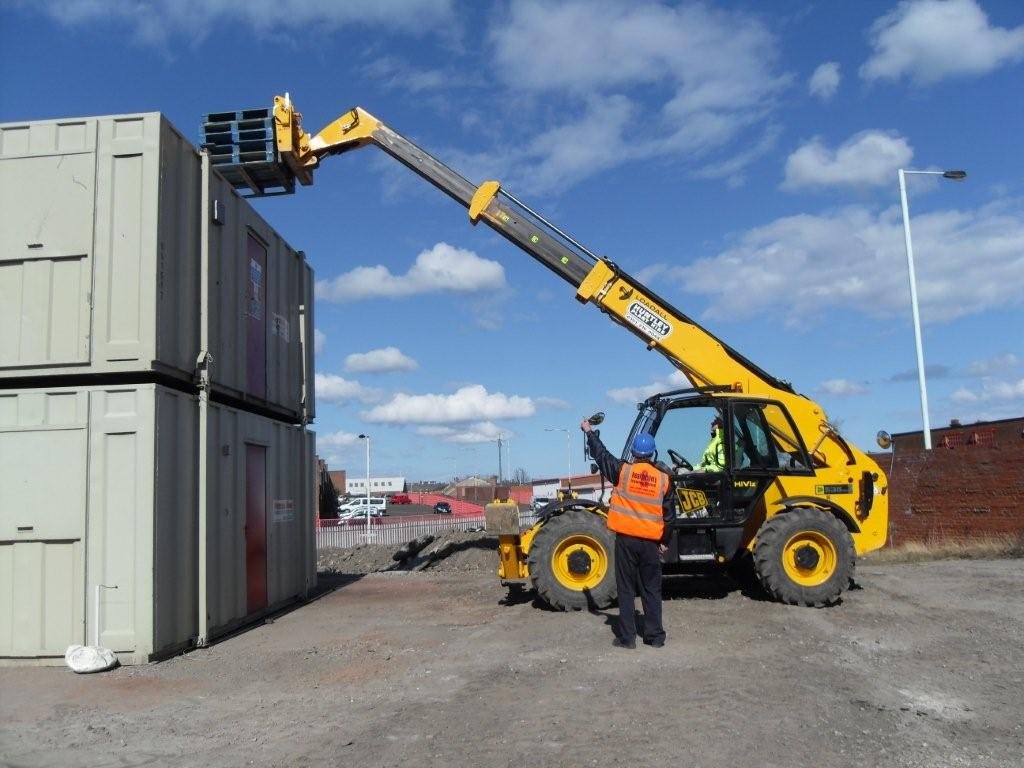
Variable-reach forklifts,
often referred to as telehandlers, feature telescopic boom lifts that are
placed in front of the machine and can be extended to a range of heights. They
are able to lift and move loads in multiple directions just by moving the boom
and are often equipped with outriggers for additional stability when lifting
and reaching. Initially, these forklifts were designed for horizontal reach
applications prevalent in the commercial and residential masonry industry.
Today, telehandlers are used in many other applications throughout the building
and construction industries.
The low height of the machine when fully collapsed offers superior maneuverability when compared to other options, and the triangular footprint increases stability on rocky terrain and slopes. While variable-reach forklifts offer a lot of versatility, it’s important to remember that with the additional weight of a boom lift attachment, telehandlers are designated as a partially loaded truck, so extra caution is needed to ensure the proper load capacity is not exceeded.
A rotating telehandler
forklift has ability to lift heavy loads at incredible heights and also rotate
on a turntable. This gives them the ability to swivel at 360 degrees so that
they can serve a wider area from one location.
Truck
or Trailer-Mounted Rough-Terrain Forklift
Another type of all-terrain
forklift is a vehicle-mounted option. The truck-mounted or trailer-mounted
forklift can be a better option for those who want a forklift that is easy to
transport and can operate over unlevelled terrain. They’re best used for
operations that require frequent loading and unloading such as in the construction
industry. These forklifts have self-propelled designs and can be attached to a
trailer or truck, offering better portability than other options. One note of
caution: not all truck or trailer-mounted forklifts are graded for all-terrain
applications.
Attachments
Improves Utility and Versatility
A wide variety of
attachments have been developed for rough terrain forklifts to improve their
utility. Attachments allow for specialized functionality and improve overall
versatility. Winches, booms, and rotating fork carriages allow the forklift to
place materials more accurately. Articulating booms, or booms with two separate
extendible arms, can reach up and over structures to place loads on interior
roof slopes or in the center of upper floors.
With a wide range of
industry-specific attachments, high-capacity forklifts and telehandlers can
adapt to demanding jobsites and replace other traditional machines. Plus, their
ability to handle heavy, bulky loads makes them ideal for performing
maintenance on other machines too. Their versatility makes them indispensable
and so forklifts are found in all construction and building sites wherever
heavy loads are to be moved.
Three of the most popular forklift and telehandler attachments are: Bucket attachments to manipulate, move, and place work site materials simply and efficiently. Carriage attachments for telescopic forklifts, to more efficiently handle wide loads, irregularly-shaped equipment and materials, and multiple pallets. Fork attachments for telehandlers allows to better move bricks, blocks, and pallet loads. These attachments are optimized for fast, maneuverable cargo performance. Lumber forks and cubing forks are further specialized attachments that provide another way to boost work site efficiency and reduce costs in time and money.
Related Articles




Current Issue
11-2026
