


Post-event Proceedings Thought Leadership Workshop on the Use of Digital Twin Technology by India Water and Wastewater Systems
Bentley Systems
successfully concluded a Thought Leadership Workshop on the Use of Digital Twin
Technology by India Water and Wastewater Systems on the 30th of November 2023.
It was hosted by the United States Commercial Service, the United States Trade and
Development Agency (USTDA), and Bentley Systems. The objective of this workshop
was to increase awareness about water digital twin solutions among governments,
water utilities, and industry stakeholders.
The event featured senior
industry leaders from the water sector, who shared their perspectives about the
role of digital twin technology. Participants included:
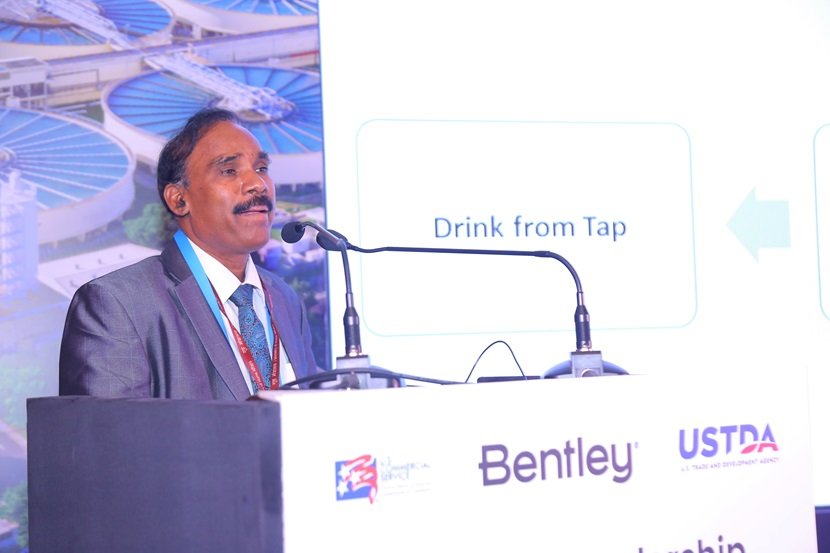
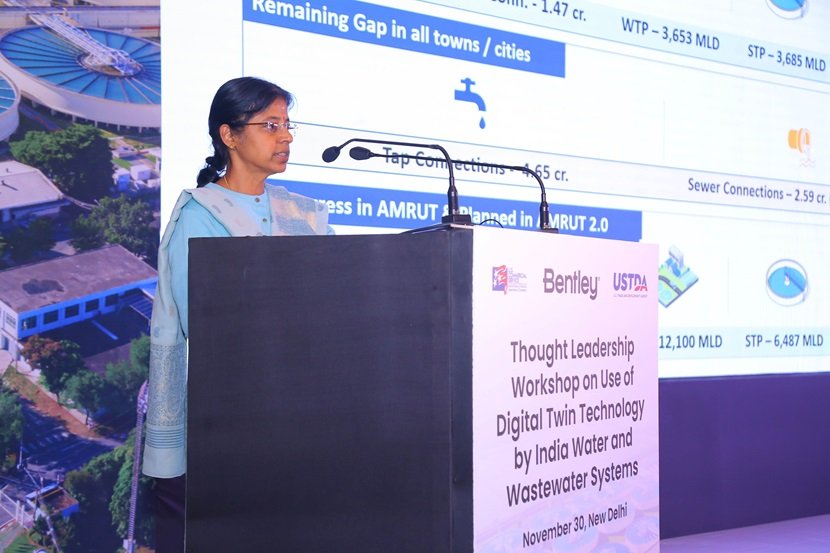
• D. Thara, additional secretary, Ministry of
Housing and Urban Affairs
• Dr. M. Dhinadhayalan, advisor, Central Public
Health and Environmental Engineering Organization
• Dr. Sanjay Dahasahasra, member, National Task
Force, Central Public Health and Environmental Engineering Organization
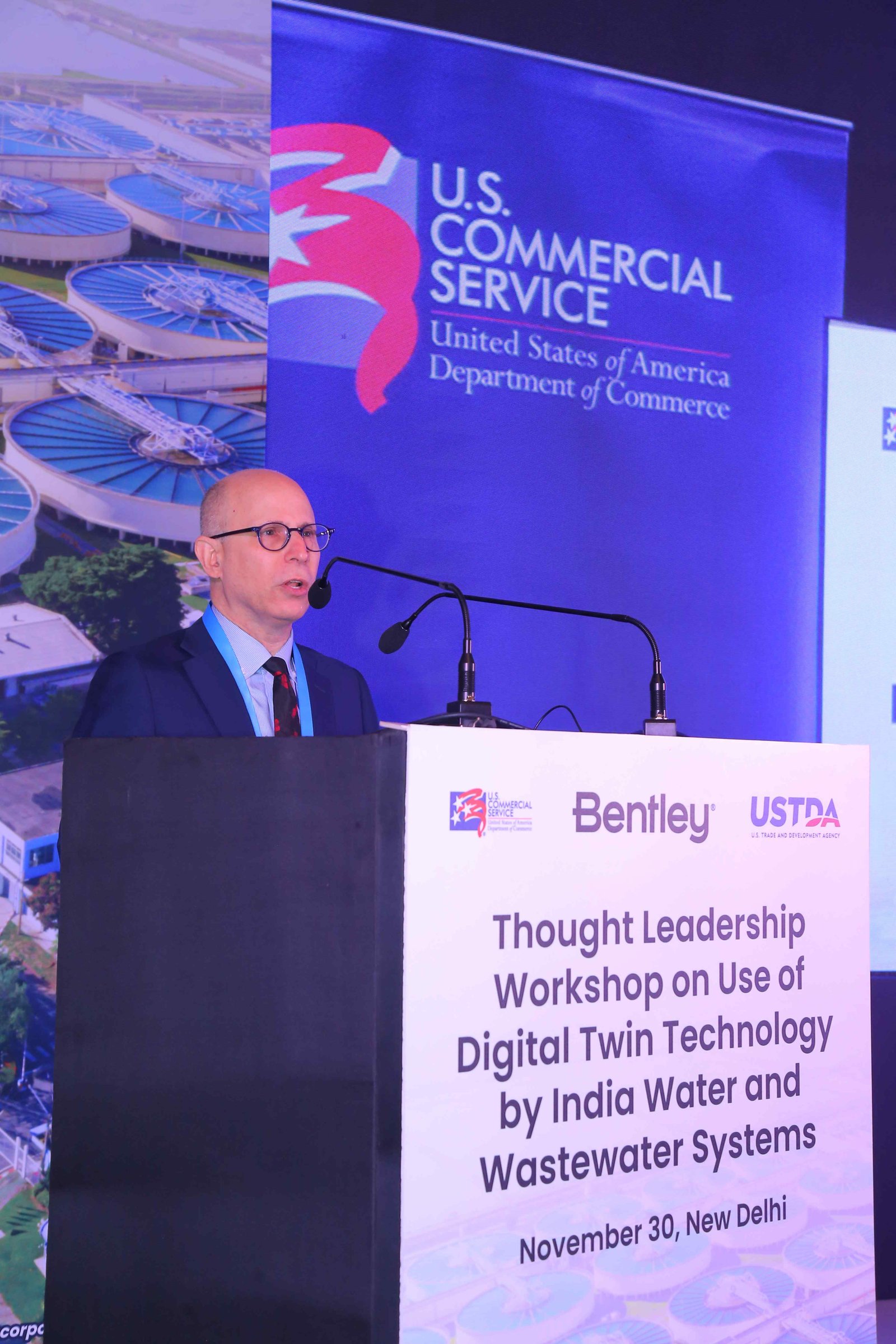
• Jonathan Heimer, minister counselor for
commercial affairs, U.S. Commercial Service
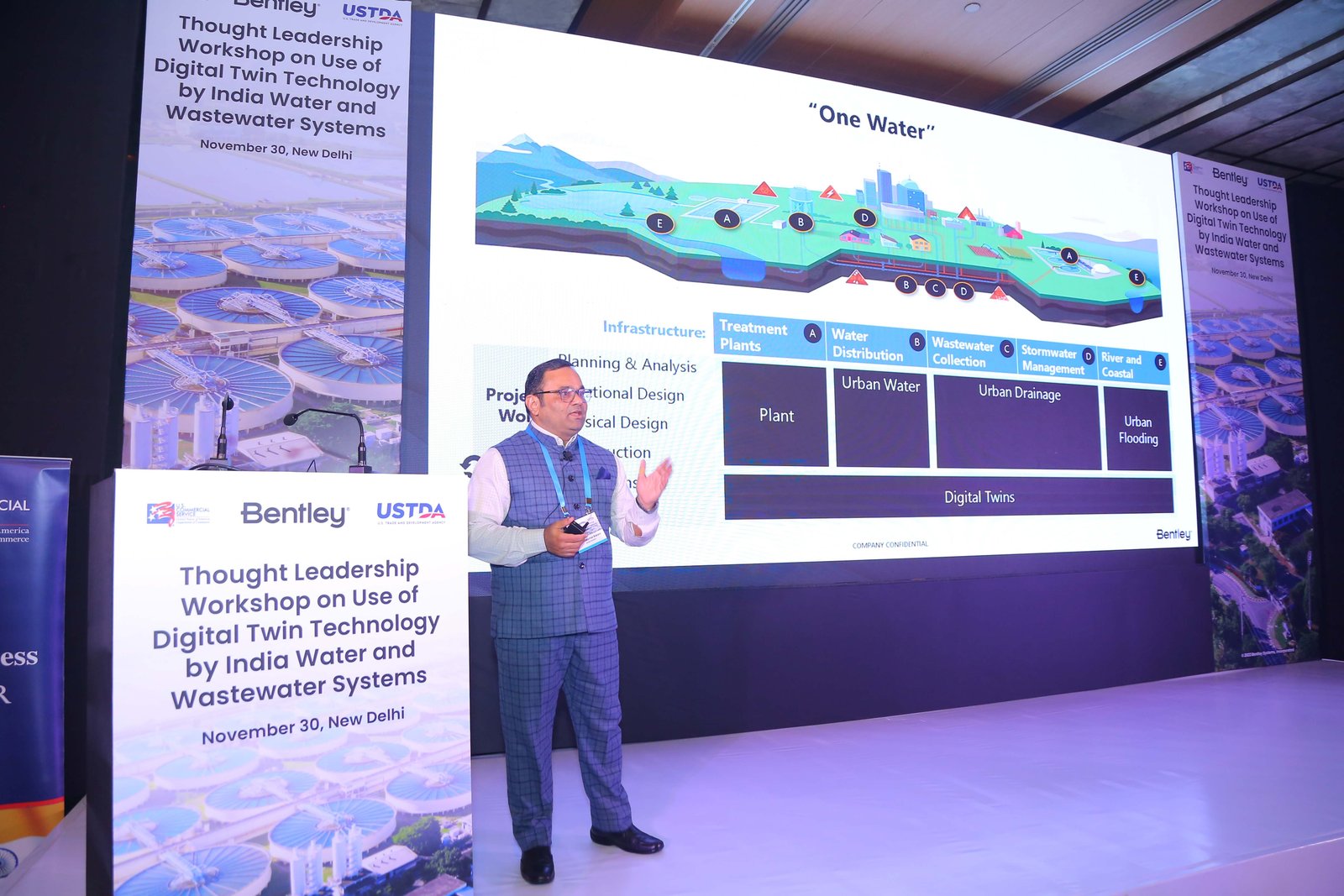
• Snehalkumar Bokare, industry director, water,
Bentley Systems
• Mehnaz Ansari, senior regional representative
- South Asia, USTDA India
The event included over 45
senior delegates from organizations that include the Ministry of Housing and
Urban Affairs, the Ministry of Jal Shakti, Central Public Health and
Environmental Engineering Organization, Delhi Jal Board, Punjab Water Supply
& Sewerage Board, Central Ground Water Board, National Mission for Clean
Ganga, Uttarakhand Payjal Nigam Dehradun, NDMC, WAPCOS, and other representative
from the Indian media.
More
information covered at the event
Digitization is emerging as
one of the key pillars for achieving water resilience in India. Government
schemes, such as Jal Jeevan Mission and AMRUT 2.0, encourage the adoption of
new and advanced technologies, and have generated numerous opportunities to
introduce innovative and digital solutions. When deploying best practices and
technology solutions to attain 24x7 water supplies in India, we should focus on
climate change while considering the water sector.
We should look at water as
a whole concept and then work toward the minute aspects related to it. The
lifecycle of the water industry comprises multiple phases, including
preplanning, planning, construction, supervision, and asset management. Also,
assets created for the water industry include the pipe supply, organizational
distribution networks, elevated storage reservoirs, water treatment plants, and
sewage treatment plants. Climate change, sustainability, the United Nations sustainable
development goals (SDG), and net-carbon zero emissions are some of the key
megatrends the global wastewater industry should consider. We see one aspect
common across these trends – digitization. Digitization helps us achieve the
ethos of what we want to create, which is mainly the provision and sanitation
of water. Well-informed decisions are key to achieving the SDG milestones, one
of which is clean water provided through the right technological applications
and platforms that create resilient and sustainable water infrastructure.
At this year’s COP28 event,
one of the important topics was the world recognizing the urgent need for
decarbonizing infrastructure. For decarbonization to take place, we need
quality infrastructure. While 75% of the needed infrastructure is in place, we
still must create more, which will easily take two decades. In this process,
various climate change issues are expected to emerge due to carbon emissions.
Hence, we need to create safe, sustainable assets, which can be done by
following the greenhouse gases protocol. It is also critical for our product
manufacturing to be carbon neutral from day one.
Today, 61.67% of India’s
economy is based on farming and agriculture. Climate change is causing havoc,
such as the state of Rajasthan flooding – even though it is a desert area – and
additional flooding across major cities due to heavy rain, presenting
challenges to the water industry and its infrastructure. These floods have a
direct impact on farmer production and on India’s economy. Hence, we must
overcome these challenges by constructing water assets and by keeping climate
as one of our key priorities.
Some challenges that the
water industry faces include aging water infrastructure, an aging workforce,
regulatory pressures, public scrutiny, rising maintenance costs, climate change
impacts, nonrevenue water, mounting pressure to meet 2030 sustainability goals,
access to clean water and sanitation, and basic human needs for health and
well-being (which is the UN SDG6). We must make cities resilient and
sustainable with better water management (SDG11), as well as strengthen
resilience and adaptation to climate incidents and natural disasters (SDG13).
Water leaders are embracing digital evolution to provide a secure future for all of us. Bentley Systems helps users address the sector’s challenges with technology that enables the creation of excellent infrastructure. Across the infrastructure lifecycle, digital twins have become mainstream. Today, they are critical enablers of how infrastructure assets are designed, built, and operated. Bentley Infrastructure Cloud, and ProjectWise in particular, is the foundation for managing infrastructure digital twins, unlocking data, and applying artificial intelligence and machine learning to projects, advancing infrastructure intelligence.
Related Articles


Current Issue

10-2026
